NG Apparels — clothing manufacturer India logo
Our Story +
Products +
Ethical Manufacturing
Resource +
FAQs Contact Us
0%

Global buyers need more than attractive prints when sourcing infant apparel across borders. They must assess fabric feel, stitching consistency, sizing, production capacity, and communication before placing an order. A soft cotton romper can look excellent in a catalog yet feel rough after repeated washing. Small details matter. Neck openings, snap placement, seam finishing, and label position all affect daily use. Buyers should compare wash-care instructions, colorfastness evidence, size grading, and packaging options alongside quoted prices. A clear sample approval process can reduce surprises, though it cannot replace checks on bulk production.

This guide presents manufacturers suited to different business needs. Some support private-label collections; others may offer more design flexibility or lower-volume options. The right fit depends on target market, budget, order size, lead time, and the buyer’s quality-control process. Ask for current samples. Request material specifications, production timelines, and clear details about minimum quantities before comparing quotations. For cross-border sourcing, confirm that product documentation and testing support match the destination market’s requirements. Capabilities can change, and a promising first conversation is not proof of consistent production. Check again. This overview of 10 Best Custom Baby Clothing Manufacturers for Global Buyers makes comparisons more focused. It also highlights questions worth asking before committing to a supplier. Custom Baby Clothing succeeds when careful design is matched with dependable manufacturing and honest verification.
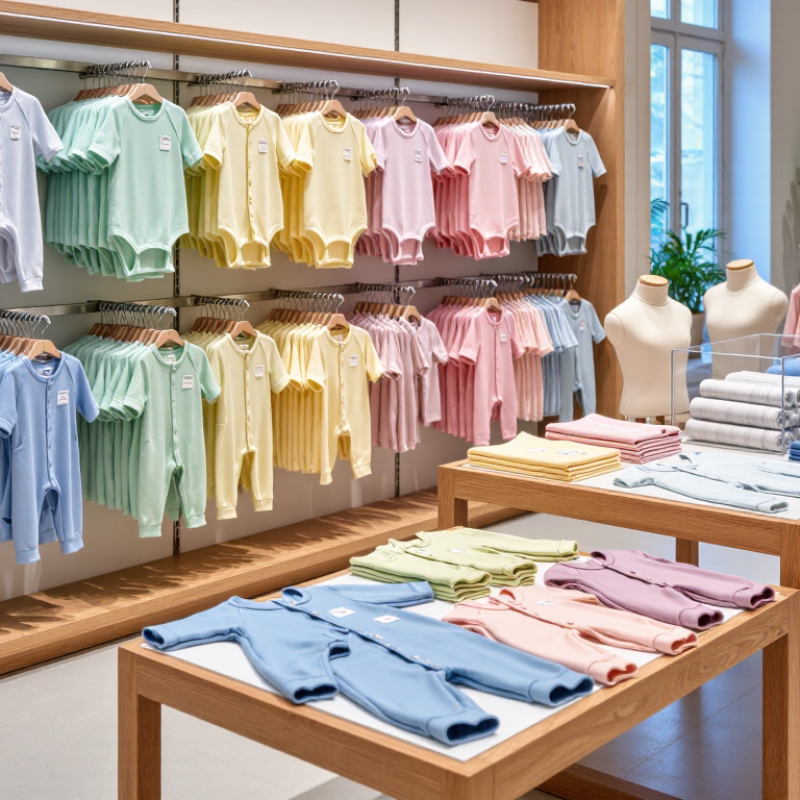
10 Best Custom Baby Clothing Manufacturers for Global Buyers

Understanding Custom Baby Clothing Manufacturing

Understanding Custom Baby Clothing Manufacturing

Custom baby clothing manufacturing turns a design brief into repeatable garments. Buyers typically provide a tech pack with measurements, fabric preferences, colors, labels, and construction details. The factory then sources materials, makes samples, and adjusts fit before bulk production. Check practical details closely: snaps should fasten smoothly, seams should feel soft against skin, and printed artwork should remain clear after washing.

Small details matter. A sample can look excellent yet fit differently after grading into several sizes, so request size-set samples when possible.

Material choices affect feel, cost, and sourcing decisions.

Textile Exchange’s Materials Market Report 2024 estimated global fiber production at 124 million tonnes in 2023, with polyester representing 57 percent. These figures describe the wider textile industry, not babywear alone, but they show why buyers should ask what each fabric contains and how it is documented.

Request fabric composition records and relevant test reports; confirm wash performance, colorfastness, and measurements against an agreed specification. Requirements differ across sales markets. I have seen specifications become vague around trims and shrinkage, so write those limits down before approving production. Lead times and minimum order quantities also vary by material, factory capacity, and season. Keep room for revisions.

Criteria for Selecting Manufacturers for Global Buyers

Global buyers should assess a manufacturer beyond sample appearance. Ask for documented checks covering fabric origin, colorfastness, shrinkage, seam strength, and batch inspections. A soft swatch proves little after repeated washing. Textile Exchange’s Materials Market Report 2024 estimates global fiber production reached 124 million tonnes in 2023, with polyester representing about 57%. That scale makes material claims worth checking against supplier records, not sales language. Request test reports for the exact fabric and dye lot, plus clear rules for approving substitutions.

Then test operational fit: minimum order quantities, sample turnaround, monthly capacity, defect handling, and shipping documentation. The World Bank’s 2023 Logistics Performance Index covers 139 countries and evaluates customs, infrastructure, tracking, and timeliness. Use these dimensions to question a supplier’s route plan; a low unit price can be erased by missed seasonal windows. Ask for a pilot run and inspect garments from several cartons, not just a hand-picked sample. Keep records. Factory audits are snapshots, and a polished audit cannot guarantee every batch is consistent. Compare corrective-action evidence and repeat checks before scaling.

Profiles of 10 Custom Baby Clothing Manufacturers

Profiles of 10 Custom Baby Clothing Manufacturers

These ten profiles highlight manufacturing capabilities global buyers can compare; they are not named or ranked suppliers. Profile 1: a small-batch maker suited to testing newborn basics. Profile 2: a knitwear specialist for soft rompers and leggings. Profile 3: a cut-and-sew factory offering custom prints. Profile 4: an organic-fiber-focused producer. Profile 5: a private-label partner with pattern development. Profile 6: a high-volume supplier for repeat orders. Profile 7: a maker experienced in embroidery and appliqué. Profile 8: a flexible workshop producing several garment types. Profile 9: a supplier offering fabric sourcing and sampling. Profile 10: a production partner with documented quality checks. Capabilities vary; confirm each one directly.

Textile Exchange’s Materials Market Report 2024 estimates global fiber production reached 124 million tonnes in 2023, with recycled fibers making up 7.7%. That figure makes material traceability worth discussing, but it does not verify any individual factory’s claims. Ask for current fabric specifications, sample wash results, measurement tolerances, and inspection procedures. Check labels and seams. Tiny snaps should be securely attached.

Tips: Request a pre-production sample in the intended fabric and color. Compare it with the approved specification, then record any changes in writing. Ask how the manufacturer handles defects and repeat orders. A polished sample is not proof that bulk production will match.

10 Custom Baby Clothing Manufacturer Profiles

Profile count in this roundup; bars identify profiles by number, not by company or brand.

Each bar represents one profile. The chart shows the roundup’s scope only and does not compare manufacturer capabilities or independently verified business data.

Comparing Product Range, Minimum Orders, and Lead Times

A useful comparison starts with the product range. Check whether a manufacturer can make bodysuits, sleepsuits, bibs, and soft accessories, then ask if those items share fabrics and trims. A broad catalogue may simplify sourcing, but it does not guarantee consistent stitching or sizing. Request a size set, fabric specification, and wash-test results before approving bulk production. Inspect the seams closely. Small differences matter on infant garments.

Minimum orders vary by style, color, and fabric. A low quoted MOQ may apply only to one stock fabric, while custom dyeing requires more units. Ask for the MOQ per color and size, plus the cost of a repeat order. Lead times also need definition: separate sample development, material booking, production, and shipping. McKinsey’s 2024 State of Fashion report found that 73% of surveyed fashion executives expected conditions to worsen or stay the same. That uncertainty makes realistic buffers more useful than a best-case delivery promise.

Tips: Compare quotes using the same fabric, size range, packaging, and shipping terms. Ask for a dated production schedule with approval checkpoints. A polished sample can still hide a weak timeline; verify capacity during your actual production window.

10 Best Custom Baby Clothing Manufacturers for Global Buyers - Comparing Product Range, Minimum Orders, and Lead Times

Anonymous supplier-type comparison for initial sourcing research. The figures below are indicative planning ranges, not verified quotes or rankings for named factories.

Supplier Profile Typical Product Range Customization Options Indicative MOQ
(per style/color)
Sample Lead Time Bulk Production Lead Time Best Fit
Small-batch cut-and-sew workshop Bodysuits, rompers, tops, leggings, simple sets Fabric, color, trims, labels, basic fit adjustments 50–150 pieces 1–3 weeks 4–8 weeks New brands testing a limited collection
Organic cotton knitwear specialist Jersey bodysuits, sleepwear, blankets, baby basics Fabric weight, garment colors, prints, labels, packaging 100–300 pieces 2–4 weeks 6–10 weeks Buyers prioritizing cotton basics and material traceability
Private-label essentials producer Multi-packs of bodysuits, tees, leggings, bibs, hats Private labels, pack configuration, colors, size ratios 300–1,000 pieces 2–4 weeks 6–12 weeks Retailers seeking repeatable core styles
Baby sleepwear manufacturer Sleepers, pajamas, gowns, sleep sacks, swaddles Fabric, closures, prints, trims, labels, packaging 200–500 pieces 2–4 weeks 6–10 weeks Brands building a sleep-focused assortment
Knitwear and sweater factory Cardigans, sweaters, knitted sets, booties, hats Yarn composition, stitch pattern, color, embroidery, labels 200–500 pieces 3–5 weeks 8–14 weeks Seasonal collections and textured baby garments
Printed apparel producer Graphic bodysuits, tees, leggings, coordinated sets Print artwork, placement, garment colors, labels, pack design 100–300 pieces 2–4 weeks 5–9 weeks Small collections with custom prints or themed designs
Denim and woven-garment specialist Overalls, trousers, jackets, dresses, woven shirts Fabric, washes, trims, embroidery, fit and pocket details 300–800 pieces 3–5 weeks 8–14 weeks Brands adding structured or fashion-led pieces
Baby accessories and apparel supplier Bibs, hats, mittens, blankets, towels, simple garments Fabric, embroidery, colors, gift sets, labels, packaging 100–500 pieces 2–4 weeks 5–10 weeks Gift ranges and accessory-led product assortments
Premium fashion cut-and-sew factory Special-occasion outfits, dresses, sets, outerwear Custom patterns, fabrics, linings, trims, embroidery, finishing 200–600 pieces 3–6 weeks 8–16 weeks Higher-detail designs and smaller premium collections
Large-scale integrated apparel manufacturer Broad babywear range, including basics, sleepwear, and sets Fabric development, color programs, labels, packaging, grading 1,000–3,000+ pieces 3–6 weeks 8–16+ weeks Established buyers placing larger, repeat orders

Lead times are planning estimates from sample or production approval and can vary with fabric availability, order size, customization, season, and shipping arrangements. Confirm the MOQ, testing requirements, delivery schedule, and applicable baby-product safety standards directly with each supplier before placing an order.

Quality Standards and International Safety Requirements

For global buyers, baby clothing quality starts with materials that feel soft but remain durable after repeated washing. Ask manufacturers for fabric composition details, colorfastness results, and records showing how each production batch is checked. Seams should lie flat against delicate skin, while snaps and buttons should resist pulling. Small details matter. A neat sample is useful, but it does not prove that bulk orders will match it.

Safety requirements differ by destination and product type. Buyers should confirm applicable rules before production, including requirements for chemical substances, flammability, labeling, and small parts. Request recent test reports for the actual fabric, trims, and colors being ordered; a report for a similar item may not be enough. Independent testing can help verify supplier claims, though no single certificate automatically covers every market. Keep approval samples and inspection records. In practice, timelines sometimes slip when testing starts late, so build time into the order plan.

Tips: Send a written specification sheet with measurements, fiber content, color references, and trim details. Ask who performs inspections and how defects are recorded. Review the paperwork carefully; even experienced buyers can overlook a label or sizing mismatch.

FAQS

What should buyers check beyond a manufacturer’s sample?

Request records for fabric origin, colorfastness, shrinkage, seam strength, and batch inspections. A soft swatch can change after several washes.

How can buyers verify the fabric in an order?

Ask for test reports covering the exact fabric and dye lot. Confirm how substitutions are approved. Keep the details in writing.

What operational details should buyers discuss before ordering?

Confirm minimum order quantities, sample turnaround, monthly capacity, defect handling, and shipping documents. A low unit price may not offset a missed delivery window.

How should buyers inspect a pilot run?

Check garments from several cartons, not only a selected sample. Record defects and compare them with the approved sample. Keep records.

What makes baby clothing durable and comfortable?

Look for soft fabric that holds up after repeated washing. Seams should lie flat, and snaps or buttons should resist pulling. Small details matter.

Which test reports should buyers request?

Request recent reports for the actual fabric, trims, and colors in the order. Reports for similar items may not be enough.

How can buyers prepare for destination-specific safety checks?

Confirm requirements for the product and destination before production. Allow time for testing; starting late can delay an order.

What should a written specification sheet include?

Include measurements, fiber content, color references, and trim details. Also ask who inspects garments and how defects are logged. Labels can be overlooked, even by experienced buyers.

Conclusion

This guide explores how Custom Baby Clothing is developed, from choosing fabrics and construction methods to turning design ideas into practical, comfortable garments. It outlines key factors global buyers can use when evaluating manufacturers, including production capabilities, communication, customization options, and experience serving different markets. The article also introduces ten manufacturer profiles to help readers understand the range of services available without relying on a one-size-fits-all solution.

A practical comparison of product ranges, minimum order quantities, and estimated lead times can help buyers match suppliers to their budgets and schedules. The guide also explains why consistent quality checks and attention to applicable international safety requirements matter when producing clothing for infants. Together, these considerations offer a clear framework for assessing potential manufacturing partners and planning a sourcing process that prioritizes comfort, quality, and dependable production.


Clara

Clara

Clara is a professional marketing specialist with a deep understanding of the company’s products, customers, and industry landscape. Through her clear, practical, and insight-driven writing, she regularly updates the company’s professional blog with valuable content that helps readers make informed......