Printed Cotton Scarves offer wholesale buyers a practical mix of everyday comfort, visual appeal, and broad styling potential. Yet the right choice depends on more than a bright pattern or attractive price. Fabric weight, weave, print clarity, stitching, and color consistency all affect how a scarf looks and performs. A soft, breathable cotton scarf may suit warm-weather collections, while a denser weave can feel more substantial on a retail display.
This guide highlights ten options and the details worth comparing before placing a bulk order. Check dimensions, fabric composition, hem finish, minimum order quantities, and available colorways. Ask suppliers how prints are produced and cared for, and request current product specifications. A close look at a sample can reveal uneven edges, muted colors, or a texture that photographs fail to show. Samples matter. Also review lead times, packaging, and whether repeat orders can match the original batch. A polished catalog image is useful, but it is not proof of consistent production. Some trade-offs are hard to avoid: a lower unit price may come with fewer customization choices or a longer wait. “Best” is therefore a buying decision, not a universal ranking. Use the selections to compare styles against your customers, budget, and seasonal plans. Then confirm the details directly with the supplier. No option fits everyone.
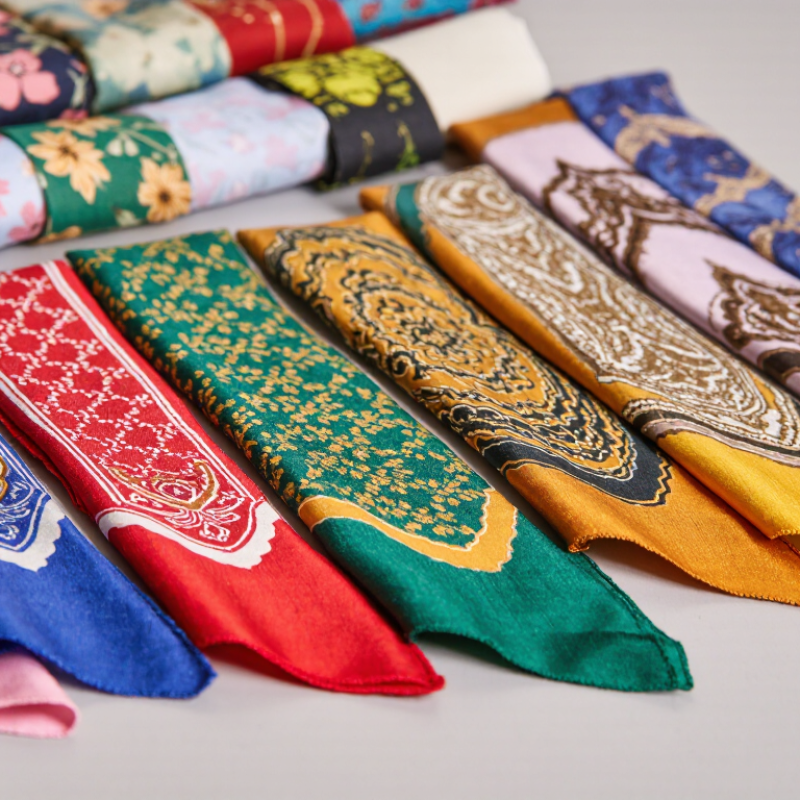
Printed cotton scarves appeal to wholesale buyers because they combine everyday comfort with flexible styling. Cotton feels familiar against the skin and suits many seasons, from cool mornings to sunny market days. A printed design adds color without changing the fabric’s practical feel. Small florals, geometric repeats, and hand-drawn patterns can attract different customer groups.
For bulk orders, details matter more than a vivid sample. Check fabric weight, weave, print clarity, and color consistency across several pieces. Ask whether the print appears on one side or both, and request care instructions. Cotton may soften after washing, but shrinkage and fading depend on the fabric and finishing. I would not judge quality from one scarf alone. That shortcut can miss uneven hems or color shifts.
Tips: Request a pre-production sample and wash it as customers might. Compare its measurements before and after, then inspect the edges and print in daylight. Confirm carton quantities and lead times in writing. A small variation may be acceptable, but define acceptable standards before ordering.
For wholesale buyers, printed cotton scarves should be judged by more than color and price. Check the fiber content and fabric weight, then feel the cloth for softness and evenness. A scarf that feels light in a sample may become flimsy after washing. Ask for the weight in grams per square meter and compare it across samples. Inspect the weave against a window; uneven gaps can affect how the print looks. Small details matter.
Tips: Request a production sample, not just a digital image. Wash it according to the intended care instructions, then check for shrinkage, color transfer, and fading. Rub a damp white cloth over a dark print. It may reveal problems quickly. Also inspect hems for loose threads and inconsistent stitching.
Before placing a bulk order, confirm that the approved sample matches the production fabric, print colors, and finishing. Ask how shade variation is controlled between batches, especially for repeat orders. Review packaging and carton quantities to prevent crushed or creased scarves in transit. Keep a written specification sheet with measurements, fabric weight, print placement, and tolerances. Perfect uniformity can be unrealistic with cotton, so agree on acceptable variation before production begins. A low price is less useful if the next batch looks noticeably different.
For wholesale buyers, printed cotton scarves work best when the assortment offers clear variety without becoming difficult to merchandise. Floral and botanical prints bring soft, garden-inspired detail; paisley adds a familiar decorative rhythm. Geometric designs feel crisp, while stripes and checks suit buyers seeking easy-to-coordinate patterns. Small details matter.
Polka dots offer a playful option, and block-print-style motifs add a handcrafted look through visible variation in the pattern. Abstract prints can make a display feel more contemporary. Bandana-inspired designs have a casual appeal, while heritage-inspired motifs can add visual depth when their references are handled thoughtfully. These ten styles cover different tastes, but no single mix fits every market.
Check the fabric as well as the artwork. A lightweight cotton scarf should drape easily, with neat hems and a comfortable handfeel. Request a sample to assess print sharpness and color consistency; a digital image can hide uneven coverage. Ask how the print behaves after washing, too. Not every pattern sells equally well. Large, high-contrast motifs may attract attention but can be harder to style, while tiny repeats may look crowded on a folded display. Test a balanced selection in realistic colors and sizes before committing to a large order.
10 Best Printed Cotton Scarves for Wholesale Buyers
Fabric quality shapes how a printed cotton scarf feels, hangs, and holds color after washing. Check the weave against a window: a balanced, even structure usually gives prints cleaner edges. Then rub the fabric gently between your fingers. Softness matters, but so does body; very thin cotton can feel flimsy when tied. Feel it dry. Ask for fabric weight, fiber details, and a wash-tested sample rather than relying on a product photo. Shrinkage and fading can change the finished dimensions or dull a bright motif. One detail is easy to miss: a smooth surface does not guarantee consistent quality across a full production run.
Print method affects both appearance and wholesale cost. Screen printing can suit repeated designs and larger quantities, though extra colors may add setup expense. Digital printing handles detailed artwork and color changes well, but fabric preparation and finishing still influence the result. Not always. Compare a printed sample with the approved artwork, especially along fine lines and scarf edges. For pricing, request a breakdown by quantity, dimensions, fabric weight, print colors, hemming, and packaging. A low unit price may exclude setup fees or careful edge finishing. I would not treat the cheapest quote as the best value without checking tolerances and delivery details. Even a strong sample can mislead if production fabric varies. Ask how the supplier checks consistency before placing a larger order.
Compare representative fabric weights and indicative wholesale prices by fabric and print method.
Fabric weights are representative specifications, not universal standards. Price figures are illustrative USD-per-unit planning estimates for orders of 500 or more; actual quotes vary by supplier, scarf size, finish, print coverage, and order quantity.
Wholesale buyers should choose printed cotton scarves around the wearer, not just the print. A city gift shop may need compact 50-centimeter squares, while resort stores often move larger, breathable wraps. Start with local climate, price ceiling, and common outfit colors. Cotton’s soft hand and easy-care appeal help, but fabric weight matters; a dense weave can feel stuffy in humid weather. Check the hand. Touch samples, not photos.
McKinsey and Business of Fashion’s State of Fashion 2024 reported that 71% of surveyed fashion executives expected industry conditions to worsen. This is a caution, not a demand forecast. Buyers can test smaller print runs before committing to deep seasonal stock. For a first order, consider a balanced mix: quiet botanicals, high-contrast geometrics, and a few vivid motifs across two sizes. Keep the color stories related, so unsold pieces can still sit together.
Ask suppliers for fabric weight, colorfastness results, and print consistency across batches. These details can affect returns more than a polished lookbook suggests. Track sell-through by size and motif after four to six weeks, then reorder the strongest performers. One season’s numbers can mislead; weather and tourist traffic may distort them. Small tests are often wiser.
| Scarf Assortment | Suggested Cotton Option | Common Size | Print Direction | Potential Target Market | Wholesale Selection Considerations |
|---|---|---|---|---|---|
| Classic square scarf | Lightweight woven cotton | 55 × 55 cm (about 22 × 22 in) | Small florals, geometric motifs, or border prints | Gift shops, fashion boutiques, and accessory departments | Offer a balanced mix of versatile colors and patterns; confirm finished measurements and hem details. |
| Large styling square | Soft, medium-weight cotton | 90 × 90 cm (about 35 × 35 in) | Large-scale botanicals, abstract art, or all-over prints | Apparel retailers and customers seeking head, neck, or shoulder styling options | Check the print placement at the corners and center, where folding may make the design especially visible. |
| Oblong neck scarf | Lightweight cotton poplin or plain-weave cotton | About 50 × 150 cm (20 × 59 in) | Stripes, repeating motifs, or narrow border designs | Everyday fashion stores and travel-accessory retailers | Compare drape, edge finishing, and color consistency across the full length. |
| Bandana-style square | Durable woven cotton | About 53 × 53 cm (21 × 21 in) | Traditional paisley, dots, or simple contrast prints | Outdoor, casualwear, and general merchandise retailers | Look for clearly defined print details and a durable hem; verify care instructions for the finished fabric. |
| Lightweight summer scarf | Fine, breathable cotton voile or lawn | About 50 × 170 cm (20 × 67 in) | Airy watercolor effects, small florals, or soft stripes | Warm-weather apparel shops and resort-area retailers | Request fabric swatches to assess sheerness, hand feel, and print appearance before placing a bulk order. |
| Textured casual scarf | Cotton gauze or lightly textured cotton | About 50 × 180 cm (20 × 71 in) | Subtle checks, tonal prints, or spaced motifs | Casual boutiques and lifestyle stores | Check how the texture affects print clarity and whether the stated dimensions are measured before or after finishing. |
| Children’s printed scarf | Soft, lightweight cotton | About 45 × 45 cm (18 × 18 in) | Simple animals, playful shapes, or bright all-over prints | Children’s gift shops and family-oriented retailers | Review applicable local product-safety requirements, age suitability, labeling, and care guidance before sourcing. |
| Minimalist print scarf | Smooth, lightweight woven cotton | About 50 × 160 cm (20 × 63 in) | Fine lines, small-scale geometry, or restrained two-color prints | Contemporary boutiques and customers who prefer understated accessories | Ask for a production sample to check fine-line registration and color contrast on the selected fabric. |
| Seasonal botanical scarf | Light-to-medium-weight cotton | About 70 × 70 cm (28 × 28 in) | Leaves, flowers, or nature-inspired repeat patterns | Seasonal gift assortments, garden shops, and fashion retailers | Plan colors and delivery timing around the intended selling season; confirm production and shipping lead times. |
| Reversible-look border scarf | Medium-weight cotton with a printed border layout | About 65 × 65 cm (26 × 26 in) | Contrasting border with a coordinated central motif | Gift retailers and boutiques looking for a more detailed presentation | Inspect both sides and the edge finish; a printed design does not necessarily make a scarf reversible. |
Sizes and fabric descriptions are common sourcing options, not fixed industry standards. Confirm fiber composition, finished dimensions, print method, colorfastness, care labeling, packaging, minimum order quantity, and lead time with the supplier before purchasing.
Check fiber content, fabric weight, weave, print clarity, and hems. A bright sample can hide flaws.
It shows whether bulk fabric and colors match the approved design. I would not rely on a photo alone.
Wash the sample using the intended care instructions. Compare measurements, then check color in daylight.
Rub a damp white cloth over a dark printed area. Look for color on the cloth.
Weight and weave affect softness, drape, and durability. Ask for weight in grams per square meter.
Look for loose threads, uneven hems, and print shifts near the edges. Small details matter.
Screen printing can suit repeated designs, while digital printing handles detailed artwork. Costs vary.
Ask for a breakdown covering quantity, dimensions, fabric weight, print colors, hemming, and packaging. Check setup fees too.
Keep a written specification for colors, measurements, and finishing. Agree on acceptable variation before ordering.
Written details help prevent ordering and delivery surprises. I might still overlook something, so review them twice.
Printed Cotton Scarves offer wholesale buyers a versatile blend of comfort, visual appeal, and broad market potential. Their lightweight feel and range of patterns make them suitable for everyday wear, seasonal collections, and gift assortments. When evaluating scarves for bulk purchase, buyers should consider fabric softness, weave, color consistency, print clarity, finishing, and how well each design suits their intended customers.
A balanced selection can include classic motifs, bold contemporary prints, subtle patterns, and varied color palettes. Comparing print methods, material quality, and wholesale pricing helps buyers assess durability and overall value, rather than choosing by appearance alone. By matching scarf styles, price points, and fabric characteristics to their target market, buyers can build a practical assortment that supports customer choice and reliable long-term demand.