Choosing a China-based supplier for Antimicrobial Fabric Finishes takes more than comparing prices or reading a product brochure. Buyers need to know which active chemistry is used, how it is applied, and what evidence supports performance after laundering. A finish described as “long-lasting” still needs a test method, stated conditions, and results relevant to the intended fabric. A cotton hospital curtain and a polyester sports shirt do not face the same wear.
Textile materials researcher Dr. Seshadri Ramkumar is a relevant expert voice in this field. Since no source text or verified quotation was provided, I won’t attribute invented words to him. A useful question can still guide this comparison: “What test evidence shows that the finish performs after repeated washing?” Ask suppliers for technical data, sample specifications, and clear limits on any performance claims. Then compare consistency, production controls, communication, and the ability to support trial orders. A polished sample is not enough. The factory process matters.
There is room for honest uncertainty. Results can vary with fiber type, finish concentration, curing conditions, and wash cycles. This guide examines what a credible supplier should disclose, how buyers can assess available evidence, and which details deserve follow-up before placing an order. No single finish fits every application. That is the part worth slowing down for.
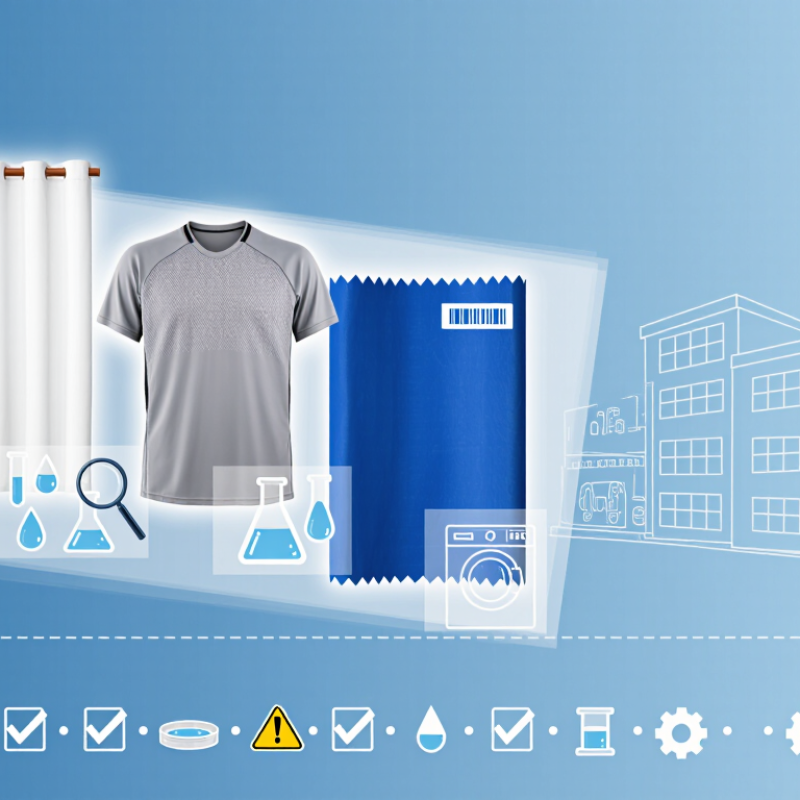
Antimicrobial fabric finishes are treatments applied to textile fibers or surfaces to limit the growth of selected microorganisms. Some finishes disrupt bacterial cell membranes; others interfere with processes bacteria need to grow. The aim may be to reduce odor or microbial buildup between washes. It is not a sterile barrier. A finish’s performance depends on the fiber, treatment, moisture, and contact time.
A 2022 Lancet analysis estimated that bacterial antimicrobial resistance directly caused 1.27 million deaths worldwide in 2019. This figure describes a major health burden; it does not show that treated clothing prevents infection. For textiles, ISO 20743 and AATCC TM100 provide methods to assess antibacterial activity. Test results can vary with the organism tested and laundering conditions. A fabric may perform well in a lab yet lose activity after repeated washing. That detail is easy to overlook.
Tips: Request test results for the intended fabric, target organisms, and wash cycles. Check whether claims concern bacteria, odor, or another effect; these are not interchangeable. A little skepticism helps.
Antimicrobial fabrics are commonly used in healthcare settings, where curtains, mattress covers, and staff uniforms face frequent handling and laundering. These finishes can help limit microbial growth on textile surfaces, but they do not replace cleaning or hand hygiene. A treated bed curtain is still a bed curtain. It needs regular care.
You may also find them in athletic clothing, socks, footwear, and shared workwear, where warmth and sweat can contribute to odor. Hotels, public transport, and schools may use treated upholstery on seats or other frequently touched surfaces. The right choice depends on the fabric, how often it is washed, and who comes into contact with it. Details matter. A finish that performs well on new fabric may weaken after repeated washing or abrasion. Buyers should ask for test data relevant to the intended use, not rely on broad claims. I would not describe every application as essential; sometimes careful laundering and durable fabric are the more practical answer.
Representative product types that may use antimicrobial fabric finishes, grouped by application.
Bars count the example product types listed for each setting—not sales, market share, or measured prevalence. Antimicrobial finishes are used in some products, not all products in these categories.
A credible antimicrobial fabric assessment begins with the right test method, not a broad supplier claim. ISO 20743 measures antibacterial activity in textiles through specified test approaches, while AATCC 100 provides a quantitative assessment. AATCC 147 offers a qualitative screening method, showing whether bacteria grow near treated fabric. These methods answer different questions. A result from one cannot automatically replace another.
For fabrics intended to resist viruses, ISO 18184 evaluates antiviral activity in textile products. Check the report for the tested organism, contact time, temperature, controls, and detection limits. Details matter. A strong reduction under one laboratory condition may not reflect everyday use, especially when moisture, soil, or repeated handling changes exposure.
Durability deserves a separate check. Ask whether the fabric was washed using a stated procedure, such as AATCC 61 or ISO 6330, then retested with the same antimicrobial method. Compare untreated and treated samples, and request results from more than one test cycle when relevant. Still, I would not treat a single impressive number as proof of lasting performance. Test reports describe specific samples and conditions; they do not guarantee identical results across every fabric construction or production batch.
When comparing antimicrobial fabric finish suppliers in China, request the same evidence from each: test method, untreated control, organism, contact time, and results after washing. ISO 20743 measures antibacterial activity in textiles, while AATCC TM100 is another commonly used quantitative method. Ask for full reports, not a single “99%” claim. That number means little without test conditions.
Grand View Research estimated the global antimicrobial textiles market at USD 10.7 billion in 2023 and forecast an 8.3% compound annual growth rate from 2024 to 2030. This market outlook signals growing demand, but it does not prove any supplier’s performance. Compare wash durability, fabric hand, shade change, and compatibility with your fiber blend. Request results for the actual fabric, not just a laboratory swatch. Small detail. Check whether testing was performed by an independent laboratory and whether report dates match the current formulation.
Review technical support, batch traceability, sample lead time, and written acceptance criteria alongside price. A low quote may exclude retesting or production-scale trials. A polished report can still leave gaps: ask how the finish behaves after repeated laundering and whether the test reflects your intended use. No scorecard removes judgment. I would keep one unresolved question visible rather than treat a supplier’s confident answer as proof.
| Evaluation Dimension | What to Request from Each Supplier | How to Compare the Evidence | Suggested Weight |
|---|---|---|---|
| Antimicrobial performance | Test reports for the proposed finish on the relevant fabric, identifying the tested organisms, test method, and measured results. | Compare like-for-like reports. ISO 20743 and AATCC 100 are quantitative methods used to assess antibacterial activity on textiles; AATCC 147 is a qualitative antibacterial test. Results from different methods are not directly interchangeable. | 20% |
| Performance after laundering | Results for treated fabric after the agreed number and type of wash cycles, with the washing procedure and test method stated. | Check that reports identify the wash conditions and retest the same performance measure after washing. ISO 6330 specifies domestic washing and drying procedures; it is not itself an antimicrobial performance test. | 20% |
| Product and application fit | Technical data covering the finish chemistry, recommended application process, fabric compatibility, curing conditions, and any effect on hand feel, color, or other required properties. | Request a trial on the actual fiber blend and construction. Confirm that the proposed process fits the intended use and the fabric mill’s equipment and finishing conditions. | 15% |
| Safety and regulatory documentation | Safety Data Sheet, available chemical-compliance documentation, and information on the intended market and product use. | Check applicable destination-market requirements and the specific chemical substances involved. REACH is an EU chemicals regulation; request evidence relevant to the product and use rather than a general compliance statement. | 15% |
| Independent testing and report quality | Full laboratory reports showing sample identification, conditioning, test method and edition, organisms tested, results, and laboratory details. | Verify that the tested sample matches the proposed finish and fabric. Where independent testing is required, confirm the laboratory’s scope and accreditation for the relevant test. | 10% |
| Manufacturing consistency and quality control | Information on batch controls, incoming-material checks, production records, and procedures for handling out-of-specification batches. | Ask how the supplier links each production batch to its raw materials and test records. Agree on incoming inspection and acceptance criteria before placing an order. | 10% |
| Claims and certification clarity | Written support for claims such as antibacterial, antiviral, or odor-control, and copies of any certificates being cited. | Match each claim to the relevant test and product. ISO 18184 is a method for evaluating antiviral activity of textile products. OEKO-TEX STANDARD 100 concerns harmful-substance testing and is not, by itself, proof of antimicrobial efficacy. | 5% |
| Commercial and technical support | Written quotation, sample and trial options, stated production lead time, minimum order quantity, packaging details, and technical contact arrangements. | Compare offers using the same fabric specification, finish target, order quantity, delivery terms, and test requirements. Treat lead times and minimum quantities as supplier-specific rather than assuming a standard market value. | 5% |
| Suggested total weighting for a buyer’s comparison score. Adjust the weights to reflect the fabric’s end use and destination market. | 100% | ||
China Best Antimicrobial Fabric Finishes Supplier?
What to Verify Before Choosing a Supplier for Your Project
When evaluating a supplier in China, look beyond claims that a finish is “long-lasting” or “broad spectrum.” Ask which active chemistry is used, how it bonds to your specific fiber, and whether it changes color, hand feel, or breathability. A cotton swatch may behave differently from a polyester blend. Small details matter.
Request test reports from an independent laboratory, and check the method, treated fabric, microbial target, and wash conditions. A result before laundering does not show how the finish performs after twenty or fifty cycles. Confirm that the report matches your intended product, not a similar fabric made for another customer. Test the actual fabric. Ask for technical data, safety documentation, batch traceability, and processing limits. It is tempting to focus on the headline result; I would check the test setup twice.
Before placing a production order, request a small trial lot. Sew, wash, and inspect it under your own conditions; record odor, shade, softness, and finish uniformity. Discuss how inconsistent batches are investigated, and who can help adjust the process. Antimicrobial treatment is one performance feature, not a substitute for routine cleaning or good product design. The best fit is a supplier willing to explain limitations plainly, share verifiable evidence, and repeat results across batches.
ISO 20743 and AATCC 100 provide quantitative assessments. AATCC 147 is a qualitative screening method that checks for bacterial growth near treated fabric.
No. Each method answers a different question, so compare results only with their test conditions in view.
ISO 18184 evaluates antiviral activity in textile products. Check the tested organism, contact time, temperature, controls, and detection limits.
Look for the test method, organism, contact time, controls, and untreated-sample results. Details matter.
Ask whether samples were washed using a stated procedure, such as AATCC 61 or ISO 6330, then retested. Results from several wash cycles can be more informative.
No. One impressive result may apply only to a specific sample and laboratory condition. It does not guarantee identical performance across fabric batches.
Request full reports using the same test method and conditions. Compare wash durability, fabric feel, shade change, and compatibility with your fiber blend.
Check independent testing, report dates, batch traceability, sample lead time, and written acceptance criteria. I would keep one unanswered question visible; a confident reply is not proof.
Antimicrobial Fabric Finishes are treatments designed to help limit the growth of microorganisms on textile surfaces. Their performance depends on factors such as the finish chemistry, fabric construction, intended use, and care conditions. These fabrics may be used in settings such as healthcare, hospitality, transportation, workwear, and home textiles, where durability and hygiene are important considerations.
When evaluating suppliers in China, compare their technical capabilities, production consistency, customization options, and ability to provide clear test documentation. Relevant performance standards and test methods can help assess antimicrobial activity, but results should be interpreted in light of the product’s intended application and expected washing or use conditions. Before selecting a supplier, verify sample quality, material compatibility, testing scope, quality controls, lead times, and communication practices. A careful review helps ensure that the finish suits the project’s practical requirements.