NG Apparels — clothing manufacturer India logo
Our Story +
Products +
Ethical Manufacturing
Resource +
FAQs Contact Us
0%

Choosing Sustainable Fleece Sweatshirts requires more than trusting a green label. The fabric may feel soft, yet its environmental story can be complicated. Recycled polyester can reduce reliance on new petroleum-based materials, but it still sheds tiny fibers during washing. Organic cotton blends offer another option, although they may change warmth, stretch, and drying time.

Start with the garment’s fiber content and supply-chain evidence. Look for clear percentages, recycled-material claims, and recognized certifications such as Global Recycled Standard or OEKO-TEX. These labels do not make a sweatshirt impact-free. They can, however, provide useful verification when brands explain their standards openly. Check the stitching, cuffs, zipper, and inner fleece before buying. A sturdy sweatshirt that survives frequent wear may be more responsible than a cheaper item replaced each season.

In practice, comfort and durability matter together. A dense fleece should resist early pilling around the elbows and under backpack straps. Wash it less often, use cold water, and avoid unnecessary tumble drying. A microfiber-catching laundry bag may help, though its effectiveness varies. Nothing is perfect here. Even careful shoppers face incomplete data, vague recycled claims, and confusing production details. I have sometimes chosen a well-made sweatshirt with limited information, then questioned that decision later. That uncertainty is worth acknowledging. The best choice balances verified materials, long-term wear, repairability, and honest brand communication. Sustainable Fleece Sweatshirts should support practical living, not create unrealistic promises.
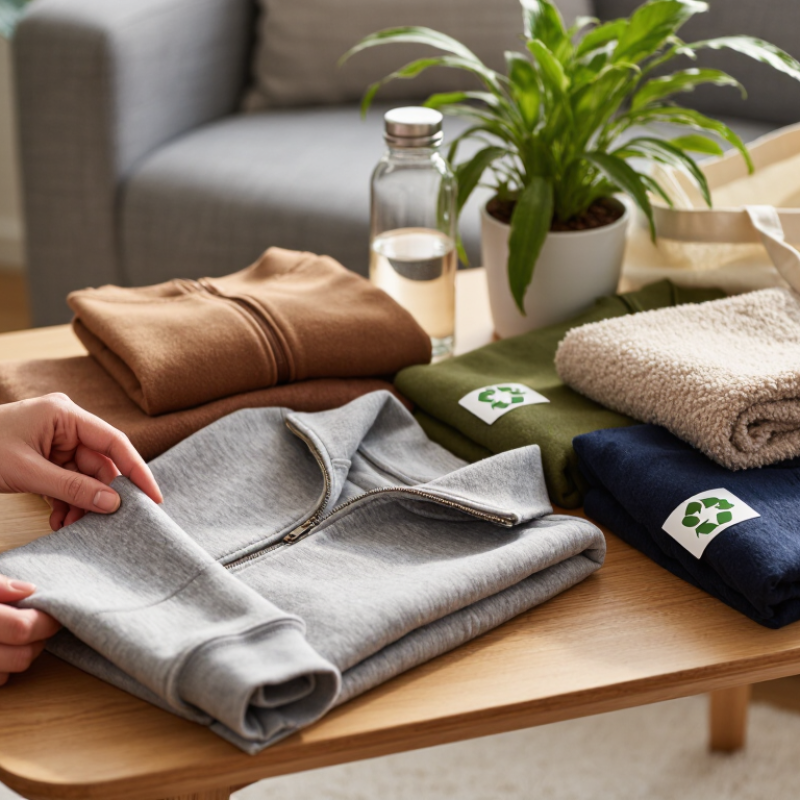
How to Choose Sustainable Fleece Sweatshirts

What Makes a Fleece Sweatshirt Sustainable?

A sustainable fleece sweatshirt starts with its fiber, but material alone proves little.

I look for recycled polyester, responsibly sourced cotton, or blended fibers with clear percentages. Vague wording makes me cautious. A credible supplier should explain where fibers originate and how they are processed. Recycled content can reduce demand for new petroleum-based fibers, though it does not remove shedding concerns. For cotton, lower-impact farming claims should be supported by recognized standards or traceable records.

I also inspect the inside: dense stitching, secure cuffs, and fabric that keeps its shape after washing. Durability matters.

A sweatshirt worn for years usually creates less replacement waste than a cheap garment that pills quickly. Look for repairable seams and care instructions that favor cold washing and air drying. These habits can reduce energy use and help preserve softness.

Packaging, dye practices, and factory working conditions belong in the assessment too. Reliable information includes testing details, production locations, and evidence from independent audits.

I do not treat one certificate as a complete answer. Standards vary, and audit snapshots may miss daily problems. That is uncomfortable. My own choices are imperfect: I sometimes prioritize fit, warmth, or price over the ideal fiber. Still, asking specific questions exposes green claims and supports a more honest purchase.

How to Evaluate Fibers, Fabrics, and Environmental Impact

Choosing sustainable fleece begins with the fiber, not a green-sounding label. Recycled polyester can reduce demand for new petroleum, yet it remains synthetic and may shed microfibers. Organic cotton avoids synthetic fibers, but its water, soil, and transport impacts depend on farming and processing. Blends can also complicate recycling. Check fiber percentages carefully, and ask whether environmental claims have independent verification. Claims need evidence.

Fabric construction matters. A dense, tightly knitted fleece usually resists pilling better than a loose, fluffy surface. Longer wear can outweigh a small material advantage. Rub the inside gently, inspect seam tension, and examine stitching around the cuffs. A sweatshirt that loses shape after five washes is not sustainable, regardless of its fiber story. I learned this through disappointing purchases. Softness at checkout can hide weak finishing.

Evaluate the full life cycle. Look for recycled-content records, safer dye processes, wastewater treatment, and repair options. Missing details should lower confidence. Washing also matters. Use cool water, wash full loads, and air-dry when practical. A filter or laundry bag may capture some released fibers, although no household method is perfect. Consider production locations and whether worker conditions are documented through credible audits. Environmental scores can simplify complex data, so treat them as clues rather than proof. A forgotten sweatshirt may deserve another season.

How to Choose Sustainable Fleece Sweatshirts

Compare the reported environmental reductions of commonly considered fleece fibers. Each value is measured against its stated conventional baseline, so the indicators should not be treated as a single combined score.

How to use this chart: Recycled polyester can substantially reduce energy use and greenhouse-gas emissions compared with virgin polyester. Organic cotton has been reported to reduce blue-water use compared with conventional cotton. For a more sustainable fleece sweatshirt, also check recycled content, fabric durability, low-shed construction, and care instructions such as cold washing and air drying.

Data sources: Textile Exchange, Preferred Fiber & Materials Market Report 2017; Textile Exchange, Organic Cotton Market Report 2019. Values represent reported percentage reductions versus the relevant conventional baseline.

Which Certifications and Supply Chain Details Matter?

When choosing a sustainable fleece sweatshirt, certifications reveal more than a recycled-fiber claim.

Textile Exchange’s Materials Market Report 2024 estimates that global fiber production reached 124 million tonnes in 2023. It may reach 160 million tonnes by 2030. That growth makes traceability essential, not decorative.

For recycled polyester, look for the Global Recycled Standard or Recycled Claim Standard. These systems can verify recycled input and track materials through certified facilities. Ask for a valid scope certificate and a transaction certificate for the specific shipment. A logo alone proves little.

For organic cotton blends, the Global Organic Textile Standard checks fiber content, processing, and social criteria. OEKO-TEX Standard 100 focuses on harmful substances in the finished garment. It does not prove low carbon emissions or ethical wages. That difference matters.

Supply chain details should name the spinning, knitting, dyeing, and sewing locations. The United Nations Environment Programme reports that textiles contribute roughly 2–8% of global greenhouse gas emissions. Therefore, ask for energy sources, wastewater controls, and production-country data.

A supplier claiming “eco fleece” should explain whether the fabric is brushed, sheared, and finished with responsible chemical management. I would also check microfiber-shedding tests, although methods still vary. This is an imperfect area. Certification reduces uncertainty, but it cannot replace careful questions, document dates, and independent verification.

How to Compare Durability, Comfort, and Ethical Production

How to Choose Sustainable Fleece Sweatshirts

Durability starts with the fabric, not the label. Hold the sweatshirt near a window. Dense, even fleece usually resists early thinning. Check the seams around the shoulders, cuffs, and pocket openings. Double-stitched seams often handle repeated washing better. A loose, fluffy surface may feel soft today, but it can shed and flatten quickly.

Comfort depends on more than softness. Try the sweatshirt over a T-shirt and move your arms. The fabric should feel warm without trapping excessive heat. Look for a balanced blend of recycled polyester, organic cotton, or other verified fibers. A brushed interior can feel pleasant, yet it may pill with friction. Wash one garment inside out on a cool cycle, then inspect the surface after drying. My own checks are useful, but not perfect. Different bodies and washing habits produce different results.

Ethical production requires careful questions. Can the maker trace the fiber to a known source? Does it publish factory locations, material percentages, and independent certification details? A factory audit offers evidence, but it does not prove fair wages by itself. More reliable information includes worker-safety policies, grievance systems, and regular third-party assessments. Packaging claims can distract from weak supply-chain transparency. Look closely. A durable, comfortable sweatshirt still carries hidden costs if workers or ecosystems receive little protection.

How to Choose Sustainable Fleece Sweatshirts - How to Compare Durability, Comfort, and Ethical Production

Fleece Type Typical Durability Pilling Risk Comfort and Warmth Moisture Handling Ethical Production Evidence Main Trade-Off
Recycled Polyester Fleece High when made with dense knitting and reinforced seams. Resists shrinking and dries quickly. Low to medium; a tightly knitted, anti-pill surface generally lasts longer than a loose pile. Lightweight, soft, and warm for its weight. Brushed interiors improve thermal comfort. Low moisture absorption and fast drying; can retain body odor more readily than cellulosic fibers. Look for verified recycled content, documented supply-chain traceability, safe-chemistry controls, and wastewater records. Sheds persistent synthetic fibers during washing unless washed less often with a filtration system.
Organic Cotton Fleece Medium to high, depending on fabric weight, yarn quality, and seam construction. More vulnerable to prolonged dampness. Medium; surface abrasion and repeated washing can create visible fuzz or pilling. Soft, breathable, and comfortable against skin. Usually warmer and heavier than lightweight polyester fleece. Absorbs moisture and feels comfortable in moderate conditions, but dries more slowly. Prefer certified organic fiber, responsible wet-processing documentation, worker-safety policies, and independent labor audits. Higher water and energy use during laundering and drying; may shrink if washed or dried at high temperatures.
Organic Cotton–Hemp Blend Fleece High potential durability because hemp fibers are strong; softness and longevity depend on the blend ratio and finishing. Low to medium; a smooth face and compact knit can reduce surface wear. Breathable with a slightly textured hand feel. Usually less plush than brushed cotton or polyester fleece. Absorbs moisture and is generally breathable, but normally dries slower than polyester. Verify organic-fiber claims, agricultural traceability, chemical restrictions, fair-wage practices, and processing-site disclosures. Can feel firmer initially and may require more careful finishing to achieve a soft fleece surface.
Recycled Wool Blend Fleece Medium to high warmth retention; mechanical strength varies because recycled fibers are often shorter than virgin fibers. Medium; rubbing, incorrect washing, and heat can encourage felting or surface fuzz. Very warm and naturally temperature-regulating. Can feel soft when blended with fine fibers. Absorbs vapor while remaining relatively comfortable across changing temperatures; dries slower than polyester. Check recycled-fiber percentage, source documentation, animal-welfare policy for any virgin wool, and responsible dyeing records. Usually costs more and may require specialized care; blends can be difficult to recycle at end of life.
Lyocell or Cellulosic-Blend Fleece Medium; wet strength, abrasion resistance, and longevity vary considerably by fiber blend and fabric construction. Low to medium when blended with a stronger fiber and finished with a compact surface. Smooth, breathable, and soft with a fluid drape. Usually less bulky than traditional fleece. Good moisture absorption and a cool hand feel; generally dries more slowly than polyester. Look for certified or documented wood sources, closed-loop solvent recovery, wastewater controls, and safe working conditions. May be less abrasion-resistant than polyester or hemp blends when used alone.
Recycled Nylon–Natural Fiber Blend High abrasion resistance and good shape retention when nylon is present in a meaningful proportion. Low to medium; performance depends on face structure and the softness of the natural fiber. Comfort varies by blend. Nylon improves resilience while natural fibers improve breathability and hand feel. Generally faster drying than all-natural fleece, but less moisture-absorbent than cotton, hemp, or wool. Verify recycled nylon content, certified supply-chain records, chemical management, and independently assessed labor standards. Mixed fibers complicate recycling and may still release synthetic fibers during laundering.
How to compare a specific sweatshirt: Check fabric weight, knit density, seam reinforcement, zipper and cuff quality, colorfastness, shrinkage information, and any independently verified durability test. For ethical production, prioritize documented fiber traceability, factory disclosure, worker-safety procedures, wage commitments, grievance channels, and wastewater or chemical-management records rather than relying only on environmental marketing claims.
Ratings are comparative guidance for typical fabric constructions, not guarantees. Actual performance depends on fiber quality, fabric weight, finishing, garment construction, washing frequency, detergent, and drying method.

How to Care for Sustainable Fleece and Extend Its Lifespan

Sustainable fleece can last for years when washing is gentle and purposeful. Check the care label before cleaning, especially if the sweatshirt contains wool, elastane, or recycled fibers. Turn it inside out and use cold water with a mild liquid detergent. A gentle cycle reduces friction, which can cause pilling and weaken soft fibers. Wash only when needed. Airing the sweatshirt overnight often removes light odors without another wash.

Avoid fabric softener and chlorine bleach. They can coat or damage fleece fibers. High heat is another quiet problem. It may shrink blended fabrics, flatten texture, or distort the shape. Press out excess water without twisting, then dry the sweatshirt flat or on a broad hanger. Keep it away from radiators and strong sunlight. For small stains, spot-clean with cool water and a soft cloth. Pat gently. Do not scrub aggressively.

Tips: Wash full loads, but avoid overcrowding. A laundry bag or washing-machine filter can help reduce fiber release. Remove pills with a fabric comb, using light strokes. Repair loose seams early. I sometimes wash clothing more often than necessary, thinking it feels fresher. That habit wastes water and shortens fabric life. Let the fleece rest between wears, fold it loosely, and store it in a dry place. Small changes matter.

FAQS

Why do certifications matter when choosing a sustainable fleece sweatshirt?

Certifications can verify recycled fibers, organic content, processing, and material tracking. A logo alone proves very little.

Which documents should shoppers request from a supplier?

Ask for a current scope certificate and a transaction certificate for the specific shipment. Check document dates carefully.

What supply-chain details deserve attention?

Look for spinning, knitting, dyeing, and sewing locations. Ask about energy sources, wastewater controls, and production-country data.

How can I judge fleece durability in a store?

Hold the sweatshirt near a window. Dense, even fleece usually resists early thinning. Inspect shoulders, cuffs, and pocket seams.

Does a soft surface always mean better comfort?

Not always. A brushed interior may feel warm but pill under friction. Try moving your arms over a T-shirt.

What information suggests more ethical production?

Look for factory locations, material percentages, worker-safety policies, grievance systems, and regular independent assessments.

How should I wash a sustainable fleece sweatshirt?

Turn it inside out and use cold water with mild liquid detergent. Choose a gentle cycle. Wash only when needed.

How can I reduce fiber release and extend garment life?

Avoid softener, bleach, and high heat. Air-dry flat or on a broad hanger. A laundry bag may help reduce released fibers.

What common care habit may shorten a sweatshirt’s life?

Washing it too often can waste water and increase wear. I still do this sometimes, assuming freshness always matters.

Are certifications enough to prove sustainability?

No. They reduce uncertainty but cannot prove fair wages, low emissions, or perfect environmental performance. Careful questions remain necessary.

Conclusion

Choosing Sustainable Fleece Sweatshirts requires looking beyond appearance and price. A truly sustainable option considers the full product lifecycle, including the origin of its fibers, the energy and water used during production, fabric processing, dyeing methods, and the potential for recycling. Recycled fibers, responsibly sourced natural materials, durable construction, and transparent manufacturing practices can all reduce environmental impact. Certifications related to material content, chemical safety, labor conditions, and responsible supply chains may provide useful evidence, but shoppers should also examine whether a company clearly explains where and how its products are made.

Comfort and ethics are equally important. Compare warmth, breathability, softness, fit, stitching quality, and resistance to pilling so the sweatshirt remains useful for years. Fair working conditions and safe production should be part of the decision. To extend its lifespan, wash fleece only when necessary, use cool water, choose gentle cycles, avoid harsh chemicals, and air-dry whenever possible. Proper care helps preserve performance, reduce microfiber release, and make Sustainable Fleece Sweatshirts a more responsible long-term choice.


Elara

Elara

Elara is a highly accomplished marketing professional dedicated to helping businesses understand opportunities, make informed decisions, and achieve sustainable growth. With extensive knowledge of the company’s products and services, Elara translates complex features, technical capabilities, and......