Precision-engineered industrial uniform sets, high-elasticity coveralls, and targeted compression garments manufactured for export compliance.

In modern technical textile procurement, compliance with international health and safety mandates is no longer an optional add-on—it is a mandatory baseline. As an established, CE-certified compression wear factory and direct exporter operating continuous manufacturing operations since 1981, our facility bridges the gap between scientific textile engineering and commercial-scale garment assembly.
Operating out of a fully integrated mill infrastructure spanning spinning, circular knitting, shuttleless weaving, automated laser cutting, and certified eco-dyeing, we eliminate third-party sourcing intermediaries. This single-roof model ensures that every high-elasticity nylon-spandex base layer, ergonomic industrial workwear suit, or graduated compression garment precisely retains its target pressure profiles (measured in millimeters of mercury, mmHg) across rigorous commercial washing cycles.
Global brands, medical distributors, and corporate apparel procurement directors face increasing pressure regarding supply chain transparency, quality assurance, and certification veracity. Under European Union Regulation (EU) 2017/745 (MDR) and Personal Protective Equipment (PPE) Directives, medical and work-rate compression garments require absolute precision in tension mapping. Our technical team works directly from buyer specifications, engineering textiles with calibrated modulus values to guarantee active circulatory support, musculoskeletal alignment, and thermal homeostasis.
True therapeutic and performance compression relies on accurate graduated pressure profiles. Standard activewear often relies on high-stretch synthetic fabrics without structural pressure gradients, leading to venous constriction or dynamic migration. In contrast, CE-certified compression apparel engineered within our facility utilizes Laplace’s Law of cylindrical pressure mechanics to deliver controlled, decremental pressure from distal to proximal anatomical zones.
Engineered for light circulatory enhancement, extended standing shift workwear, mild fatigue prevention, and foundational industrial baselayers.
Targeted medical-grade support, post-effort muscle stabilization, deep tissue fatigue mitigation, and high-impact ergonomic engineering.
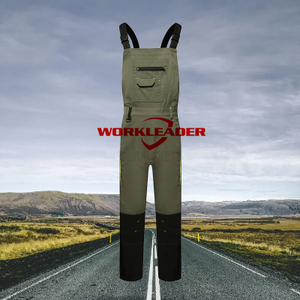
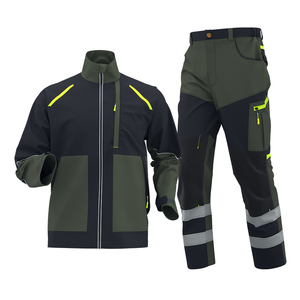
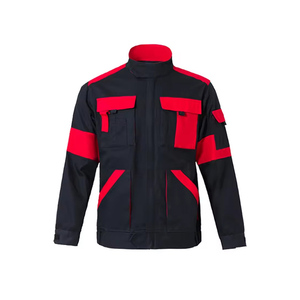
Combines multi-directional elastomeric recovery with abrasion-resistant outer panels for construction, logistics, and heavy workshop mechanics.
Our fabric development lab custom-blends high-filament air-covered Spandex (Elastane) with core-spun Nylon 6,6 or specialized moisture-wicking Polyester. By controlling the stretch yarn wrap density and tension during warp-knitting or circular-knitting phases, we achieve specified modulus curves:
The global market for compression wear and functional technical workwear is undergoing a structural transition driven by regulatory tightening, ergonomic protection standards, and corporate sustainability mandates. B2B buyers must navigate these emerging trends to ensure long-term supply chain viability:
Global brand owners are setting aggressive targets for Scope 3 emissions reductions. Future-ready procurement mandates the transition from virgin petrochemical elastane blends to recycled Nylon (GRS-certified post-consumer fishnets) and bio-derived bio-spandex alternatives that maintain high modulus recovery without compromising technical performance.
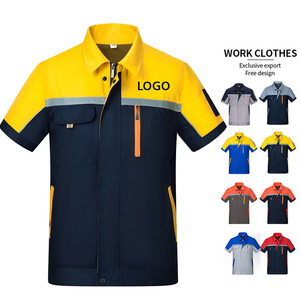
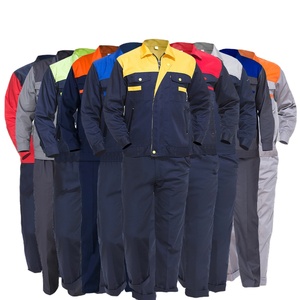
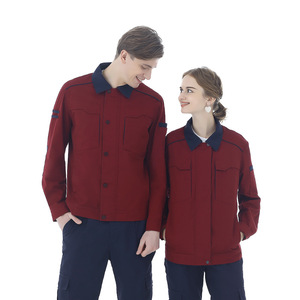
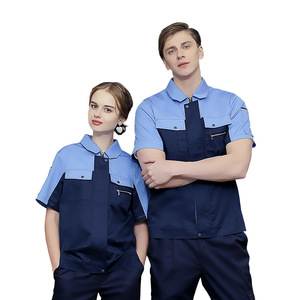
Industrial workwear buyers are moving away from traditional bulky cotton overalls toward high-mobility, multi-hazard garments. Modern workshop and engineering uniforms integrate graduated compression inner layers with flame-retardant (FR), anti-static, and rip-resistant outer fabrics to minimize musculoskeletal strain while preserving safety compliance.
Customs officials and health authorities across the EU, North America, and the Middle East are intensifying audits on self-declared certifications. Importers require complete technical files including ISO 13485 manufacturing documentation, OEKO-TEX Standard 100 Annex 6 hazardous chemical testing, and verified factory audit reports (BSCI / SMETA).
Advancements in computer-programmed 3D seamless circular knitting allow for localized variable tension zones within a single piece of fabric. This eliminates bulky sewn seams, reduces friction points, and optimizes compression over specific muscle groups, such as the quadriceps, calves, and lumbar regions.
Sustaining high-volume export capacity while maintaining precise millimeter-level tension tolerances requires advanced production machinery and rigorous inline testing protocols. Our manufacturing infrastructure incorporates:
Equipped with digital yarn feeding sensors that continuously measure yarn input tension to guarantee batch-to-batch pressure consistency.
Computer-guided laser cutting tables maintain sub-millimeter edge accuracy, preserving dynamic stretch vectors critical for technical compression garments.
Every production lot undergoes mandatory pressure mapping evaluation using industry-standard Salzmann testing apparatus before bulk packing.
By unifying raw yarn extrusions, custom dye bath formulation, and pattern grading within our facility, we reduce prototyping cycles to under 14 days and deliver bulk export shipments within 7 to 9 weeks from final tech pack sign-off.
Operating without intermediary trading companies or third-party sourcing agents, our business model offers distinct operational and financial protections for international buyers:
By eliminating agent commissions and middleman margins, buyers secure premium technical fabrics, reinforced trim hardware, and specialized functional finishes at direct mill costs.
Your tech packs, vector artwork, proprietary sizing blocks, and brand logos remain fully contained within our internal CAD database under strict non-disclosure agreements (NDAs).
Accelerate your speed-to-market. Leverage our library of over 3,000 pre-graded master patterns for men's, women's, and unisex compression and workwear garments to streamline initial sampling.
Every bulk shipment undergoes strict inline, mid-line, and final end-line inspections adhering to international Acceptable Quality Limit (AQL) standards. Full QA reports accompany shipping manifest documents.
Essential guidance on certifications, minimum order quantities, tech packs, custom fabrications, and global export shipping.
Our compression apparel and workwear garments are manufactured in strict compliance with relevant European Union directives. Depending on the product specification, garments meet CE Medical Device Regulation (EU 2017/745) Class I standards for graduated circulatory compression, or EN ISO 13688 general requirements for protective clothing. We provide full laboratory test documentation for color fastness, yarn composition, skin biocompatibility (ISO 10993), and pressure graduation curves certified by accredited third-party testing facilities.
Our baseline Working Minimum Order Quantity is typically 300 pieces per style, which can be split across standard colorways and a full size run (S through 5XL). For styles utilizing our stock-supported high-elasticity nylon/spandex fabrics, we offer flexible lower minimums for initial brand launch phases. Custom fabric developments requiring bespoke yarn dyeing or proprietary mill knitting require higher volume commitments due to fixed dye-house lot sizes.
The standard end-to-end manufacturing timeline spans 7 to 9 weeks total:
1. Tech Pack & Costing Verification: 1 week.
2. Prototype & Pre-Production (PP) Sampling: 2 weeks.
3. Bulk Manufacturing & Quality Inspection: 4 to 6 weeks.
Shipping times vary by delivery mode: express air freight requires 5 to 8 business days, while ocean container shipping takes 4 to 6 weeks depending on the destination port.
Yes, we operate as a full-service OEM/ODM manufacturer. We customize every detail of your product line, including high-density heat transfer logos, woven side-seam labels, silicone leg grippers, custom zippers, branded drawcords, barcode hangtags, and eco-friendly polybag packaging ready for retail distribution or e-commerce fulfillment.
Because we operate an internally integrated manufacturing facility without external sourcing brokers, your technical packs, vector patterns, and artwork are never circulated to external third parties. We sign binding non-disclosure agreements (NDAs) before sampling, and all digital design assets are securely stored inside our isolated internal server architecture.
Yes. We offer sustainable fabric selections including GOTS-certified organic cotton, GRS-certified recycled polyester (made from post-consumer PET bottles), recycled nylon, and natural viscose bamboo blends. Complete transaction certificates (TC) and raw material chain-of-custody documentation are provided with every certified bulk export shipment.
Our quality assurance framework implements a four-stage inspection protocol: initial raw yarn inspection, inline knitting tension audits, mid-line seam strength checks, and 100% final end-line garment inspection based on AQL 2.5/4.0 standards. Dimensional stability, color fastness to perspiration/washing, and elasticity recovery tests are documented for every production batch.
Send your tech packs, design sketches, or garment specifications to our engineering team today. Receive a comprehensive feasibility evaluation and factory-direct price quotation within 24 business hours.
Inquire Now