Explore our export-ready OEM/ODM manufacturing capability across heavy-duty industrial workwear, high-mobility workshop uniforms, and high-performance cycling wear.

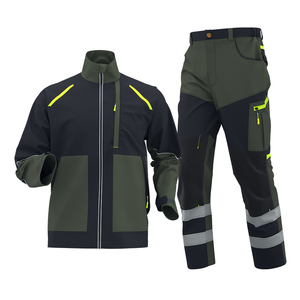
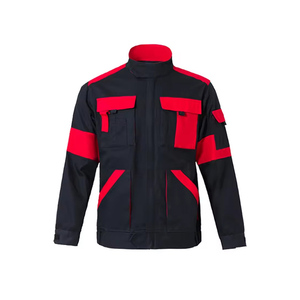
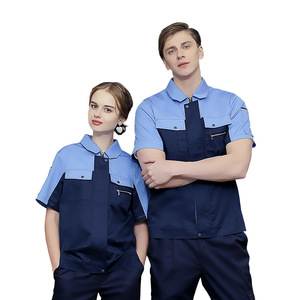
In the highly competitive global athletic apparel market, cycling shorts represent one of the most technically demanding product categories. Unlike standard compression wear, high-tier road cycling bib shorts, mountain bike (MTB) liner shorts, and multi-discipline indoor spin shorts demand an intricate balance of biomechanical engineering, advanced material chemistry, and specialized garment construction. For global apparel brands, private label importers, and commercial procurement directors, selecting the right China wholesale cycling shorts factory is a decision that dictates brand reputation, return-rate minimization, and ultimate market profitability.
Information Gain Insight: The performance of technical cycling shorts is 70% dependent on the chamois pad density integration and fabric elasticity retention, and 30% dependent on seam placement ergonomics. Sourcing factories without in-house pattern masters and CAD grading systems increases fit failure rates by up to 34% across international size runs.
To withstand high-cadence friction, thermal buildup, and intense perspiration, fabric selection must adhere to rigorous technical criteria. As a specialized original equipment manufacturer (OEM), our fabric mill integration leverages high-gauge circular knitting machines capable of producing warp-knit and circular-knit compression textiles.
The chamois interface is the vital contact point between rider and saddle. A primary indicator of an experienced factory is its capability to correctly select, heat-press, and stitch 3D ergonomic pads based on riding discipline, distance duration, and gender-specific anatomy.
Our production lines incorporate imported Italian Elastic Interface (EIT) pads as well as proprietary multi-density matrix foam chamois engineered in-house:
Standard overlock stitching is fundamentally unsuitable for high-end cycling wear. Our manufacturing facility employs specialized 6-needle 4-thread flatlock machines (ISO 607 stitch style) that produce ultra-flat, stretchable, and burst-resistant seams.
Stay ahead of market shifts. Key technical innovations and sustainability mandates reshaping how international brands source activewear and protective workwear.
Global buyer demand is rapidly shifting toward ECONYL® regenerated nylon and GOTS-certified recycled yarn matrices. European and North American customs regulations increasingly penalize virgin synthetics, making certified sustainable supply chains mandatory for competitive entry.
Next-generation cycling bibs are phasing out traditional needle-sewn construction in favor of stitchless ultrasonic welding and hot-melt TPU tape bonding. This produces lighter, aerodynamic garments with 0% seam chafing and enhanced hydro-dynamics.
Integration of ionic silver thermo-regulating coatings and phase-change materials (PCM) that actively react to body temperature fluctuations, maintaining optimal microclimates during intense climbs or sudden cold descents.
Eliminating middleman markup, protecting intellectual property, and ensuring end-to-end quality control from raw yarn to door-to-door export logistics.
Family-operated production infrastructure built over four decades. Our deep operational expertise translates to zero rookie errors, stable labor retention, and unmatched technical craft.
No sourcing agents involved. Tech packs, proprietary patterns, and artwork stay strictly inside our facility, protected under legally binding non-disclosure agreements (NDAs).
Accelerate sample turnaround times from weeks to days. Choose from thousands of pre-graded master blocks across Western size standards (US/EU/AU fit) or build 100% custom tech packs.
Inline standard checking and final AQL 1.5/4.0 visual and dimensional inspection protocols on every production batch prior to moisture-proof export packaging and sea/air dispatch.
Evaluating the total cost of ownership, risk exposure, and production transparency across supply chain models.
| Evaluation Parameter | Direct Factory Exporter (Our Model) | Sourcing Agents / Trading Companies |
|---|---|---|
| Price Structure | Direct factory costing without hidden broker margins or commission markups. | 15% to 35% price inflation to cover agent commissions and sub-contractor fees. |
| Tech Pack Fidelity | Direct communication with sample pattern masters and textile engineers. | Comments translated through non-technical sales agents, leading to misinterpretation. |
| Fabric Traceability | Full lot traceability with OEKO-TEX, GOTS, and lab test reports for colorfastness. | Frequent unannounced fabric downgrades to maximize middleman profit margins. |
| IP Protection | Archived in secure in-house CAD server under brand-specific client vaults. | Tech packs frequently shopped around to multiple low-tier factories for quotes. |
| Quality Control | Dedicated inline QA inspectors checking stitch density, seam tension, and chamois alignment. | Intermittent third-party checks often conducted only at final packing stage. |
Clear answers to key commercial, technical, and logistical questions before placing your custom apparel order.
Our standard working MOQ is 300 pieces per style/colorway, split across a full size run (e.g., XS to 3XL). For orders utilizing stock-supported high-compression fabrics or standardized chamois pads, we can accommodate lower launch quantities for emerging brands. Custom-dyed yarn runs require higher volumes due to dye-vat lot capacity constraints.
Yes. We offer complete private label production. This includes custom high-density chamois pad embossing, custom laser-cut leg grippers with woven or printed brand logos, silicone heat-transfer care labels, customized branded waistbands, micro-injection rubber badges, and eco-friendly polybag packaging with custom scannable barcodes.
Total sample-to-delivery timeline typically ranges from 7 to 9 weeks: 1 week for tech pack feasibility costing and CAD review, 2 weeks for physical prototype creation and fit approval, and 4 to 6 weeks for bulk sewing, finishing, and QC packing. Air freight transit requires 5 to 8 days, while sea freight requires 3 to 5 weeks depending on destination port.
All fabrics and trims used in our technical production are OEKO-TEX Standard 100 certified, guaranteeing zero harmful substances, toxic dyes, or heavy metals. We regularly supply REACH compliance documentation for European exports and GOTS/GRS transaction certificates for organic cotton and recycled polyester lots.
We utilize Gerber and Lectra 3D CAD pattern-making systems loaded with standardized US, European, and Australian body measurement charts. Our pattern masters grade proportional stretch tolerances into technical garments based on fabric elastane recovery rates, ensuring consistent, true-to-size compression fit.
We strictly enforce AQL 1.5 / 4.0 inspection standards. Production runs undergo 4 stages of quality control: Raw Fabric Inspection (4-point system), Cut-Piece Checking, Inline Stitching Inspection (monitoring needle heat, thread tension, and seam elasticity), and Final Garment Inspection (dimensional measurements, trim pull-tests, and thread trimming).
Send us your tech pack, reference design, or preliminary target specifications. Our engineering team will review feasibility, fabric availability, and provide direct factory costing within 24 hours.
Inquire Now