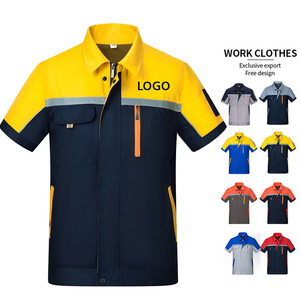
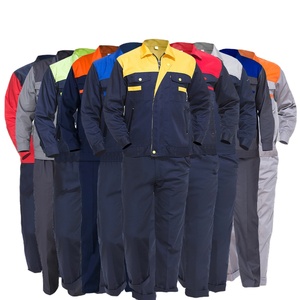
Engineered for construction engineers, industrial mechanics, electrical workshops, and logistics teams. Fully customizable in GSM, colorway, size grading, and brand insignia.

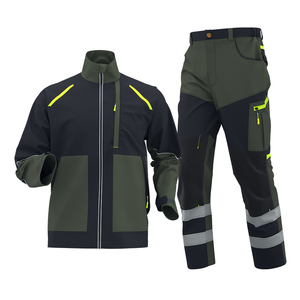
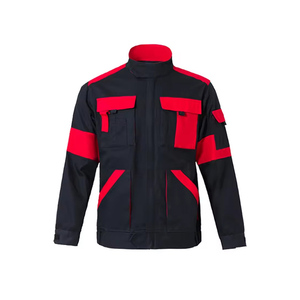
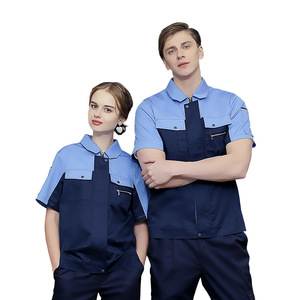
In today's volatile global textile ecosystem, brand owners, workwear distributors, enterprise procurement directors, and retail chains face mounting pressure. Balancing quality consistency, supply chain transparency, ethical compliance, and cost competitiveness is no easy task. Navigating the complex landscape of finding a reliable Custom OEM Private Label Manufacturer & Supplier requires more than just requesting fabric swatches or compare price quotes. It demands a deep, technical understanding of vertical manufacturing infrastructure, material science, pattern engineering, and international regulatory frameworks.
With over 45 years of continuous manufacturing expertise since 1981, our family-run facility headquartered in Ludhiana, Punjab, India, stands as an industry benchmark for ethical, vertically integrated apparel production. By eliminating non-value-adding middleman trading agents and controlling every phase of manufacturing—from raw yarn spinning, circular knitting, shuttleless weaving, eco-friendly dyeing, to precision CAD pattern grading and automated cutting—we offer global buyers a direct, highly audit-transparent manufacturing route.
No sourcing agents, trading companies, or hidden third-party markups. Direct contact with master pattern engineers and textile technicians guarantees 100% design confidentiality and instant technical feedback on your tech packs.
We maintain an industry-leading minor defect rate of <5% on hand-finished technical workwear. Every batch undergoes inline, mid-line, and final AQL 2.5/4.0 inspection protocols with certified lab test reports provided prior to dispatch.
A primary failure point for brands expanding their private label workwear, sportswear, or corporate uniform lines is reliance on third-party sourcing agents. Agents routinely circulate confidential client tech packs to multiple unvetted third-party workshops, leading to intellectual property dilution, inconsistent fabric GSMs, unapproved dye substitutions, and delayed shipments. Partnering directly with a vertically integrated OEM manufacturer eliminates these operational vulnerabilities.
| Evaluation Parameter | Direct Vertical OEM Manufacturer (NG Apparels Route) | Third-Party Sourcing / Trading Agents |
|---|---|---|
| IP & Design Confidentiality | 100% In-house pattern vaulting; NDA protected; zero external leakage. | Tech packs often broadcasted to multiple sub-tier factories for quotes. |
| Fabric Development & Custom GSM | Bespoke yarn composition, custom GSM, specific weave/knit development. | Restricted to off-the-shelf stock fabrics with fixed colors and compositions. |
| Technical Finishes & Compliance | In-house chemical/mechanical application (Water repellent, UV, Antimicrobial, FR). | Unverified chemical treatments without lot-level traceability certification. |
| Margin Stacking & Cost Control | Direct factory costing; transparent Bill of Materials (BOM) breakdowns. | 15%–35% hidden agent commission stacked onto production costs. |
| First-Sample Accuracy | 99% accuracy on initial prototype, supported by 3,000+ archived blocks. | Multiple iterations required due to communication barriers with actual tailors. |
Modern industrial workwear and technical apparel demand specialized chemical and mechanical finishing treatments to survive harsh job-site conditions. Our manufacturing facilities are equipped to apply advanced functional treatments tailored to your exact industry specifications:
1. Water & Stain Repellency (C0 DWR): Eco-friendly fluorocarbon-free Durable Water Repellent (DWR) coatings that resist industrial fluids, oils, and mud while maintaining textile breathability.
2. Flame Retardant (FR) Treatments: Compliance with international safety standards (EN ISO 11612, NFPA 2112) for electrical, oil & gas, and welding workwear.
3. Antimicrobial & Odor Control: Silver-ion and bio-based treatments ideal for medical scrubs, cleanroom apparel, and long-shift mechanics' uniforms.
4. High-Visibility Reflective Integration: Application of EN ISO 20471 certified heat-transfer micro-prismatic and glass-bead reflective tapes engineered for up to 50 industrial wash cycles.
As the global apparel sector moves toward 2030, procurement strategies are undergoing a fundamental shift. Sourcing directors can no longer rely on low-cost labor alone; they must evaluate suppliers through the lens of sustainability, technological adaptability, and supply chain resilience. Below are the key micro and macro trends shaping the future of custom workwear and private label garment manufacturing:
Global regulatory bodies (such as the EU Corporate Sustainability Due Diligence Directive) are making fiber traceability mandatory. Future-proof procurement requires partners capable of supplying GOTS-certified organic cotton, Recycled Polyethylene Terephthalate (rPET), and bamboo viscose with complete lot-level Transaction Certificates (TC).
Traditional rigid 100% heavy cotton workwear is rapidly being superseded by high-tenacity Nylon-Spandex and poly-cotton elastane blends. Modern workers demand 4-way stretch, moisture-wicking gussets, and lighter GSM weights without compromising tear resistance or burst strength.
Maintaining massive stock inventory is giving way to agile, on-demand replenishment cycles. Indian export hubs like Ludhiana offer strategic advantages: access to home-grown long-staple cotton, established ocean freight lanes to Europe, North America, and the Middle East, and shorter turnaround times (7–9 weeks total tech-pack-to-door lead time).
Brand incubators and enterprise fleet modernization projects require flexible Minimum Order Quantities (MOQs). By leveraging digital CAD pattern grading and 3D virtual sampling, manufacturers can drastically shorten prototyping phases while offering lower entry thresholds (starting at 300 pieces per style).
Executing a custom workwear order seamlessly requires a standardized, transparent operational workflow. Our three-stage manufacturing process is engineered to minimize sample iterations, control fabric shrinkage, and ensure on-time delivery across global borders.
Your tech pack—containing measurement charts, fabric GSM specs, Pantone color references, trim details, and artwork placement—is systematically evaluated by our senior merchandising team. We confirm technical feasibility, calculate yarn consumption, and provide a binding unit price quote.
We cut and assemble a physical prototype for fit verification, seam review, and drape evaluation. Upon your feedback, patterns are digitally graded across your full size matrix (from XS to 5XL+), followed by a final Pre-Production (PP) sample sign-off.
Bulk production runs under continuous inline quality control. Fabric undergoes pre-shrinkage wash testing and color-fastness trials. Once stitched, garments are end-line inspected, polybagged with custom barcodes, packed into heavy-duty water-resistant export cartons, and shipped via air or sea freight with full customs clearance support.
Essential answers for sourcing directors, brand managers, and B2B buyers looking to initiate custom OEM/ODM apparel manufacturing.
Our standard working MOQ is typically 300 pieces per style, which can be split across multiple colorways and a full size set (e.g., S through 3XL). For styles utilizing stock-supported fabrics, lower introductory quantities may be accommodated. However, custom fabric developments requiring dedicated yarn dyeing or specialized chemical finishes necessitate higher initial lot volumes to optimize production efficiency.
Total factory turnaround time is approximately 7 to 9 weeks: 1 week for tech pack review and BOM costing, 2 weeks for prototype sample tailoring and approval, and 4 to 6 weeks for bulk cutting, stitching, inline QA, and export packaging. International sea freight transit adds approximately 4 to 6 weeks, while expedited air freight delivers within 5 to 8 business days worldwide.
Yes. We regularly produce hoodies, t-shirts, sweatshirts, and workwear using GOTS-certified organic cotton, GRS-certified recycled polyester, and sustainable viscose-bamboo blends. We supply full traceability documentation and transaction certificates for certified fabric lots to ensure your brand's environmental claims are fully verifiable.
Because we operate as a direct, vertically integrated factory without reliance on intermediary sourcing agents, your tech packs, vector artwork, and proprietary measurement charts are processed strictly in-house. All patterns are vaulted inside our secure CAD servers under your dedicated brand account and are never circulated to third-party sub-contractors.
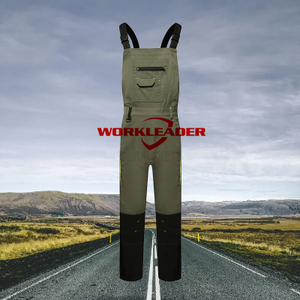
Our manufacturing capabilities cover men's and women's industrial workwear, construction coveralls, high-visibility bib overalls, mechanics' shop uniforms, medical scrubs, activewear, thermal fleece outerwear, knitwear, and woven shirts. Functional finishes include flame retardancy (FR), durable water repellency (DWR), anti-static, anti-bacterial, UV-cut protection, and heavy-duty wash finishes (enzyme, stone, and acid washing).
Our main manufacturing complex is situated at 270-A, Industrial Area-A, Cheema Chowk, Ludhiana - 141003, Punjab, India—located approximately 45 minutes by air from New Delhi. We maintain an open-door policy for brand audits, client QA teams, and third-party inspectors (such as SGS or Intertek). We also offer live interactive video walkthroughs of active production lines for remote buyers.
Partner directly with an established, vertically integrated Indian garment manufacturer. Send us your tech packs, sample requests, or target pricing for a detailed feasibility analysis within 24 hours.
Inquire Now