Explore our high-performance activewear sets engineered for maximum breathability, 4-way stretch recovery, and seamless body-contouring ergonomics.
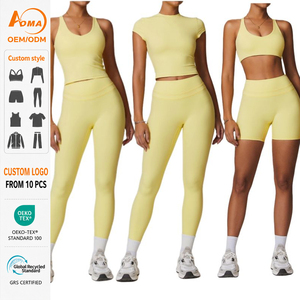
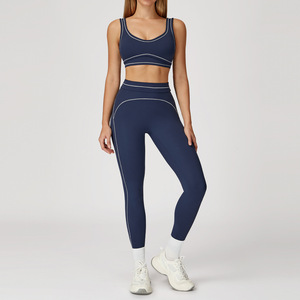
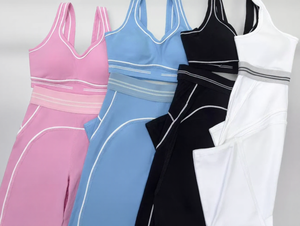
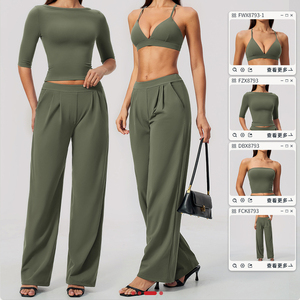
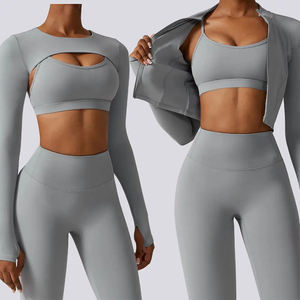
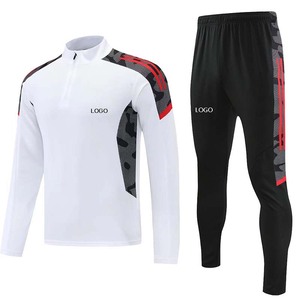
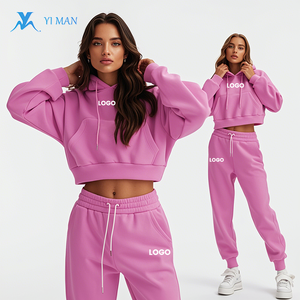
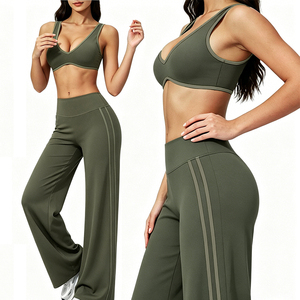
Eliminating middleman friction: How direct-to-factory vertical manufacturing safeguards tech packs, lowers landed costs, and accelerates time-to-market.
Unlike traditional assembly-only sweatshops, our vertically integrated facilities operate circular knitting and warp-knitting machinery. We engineer custom synthetic blends (Nylon 6.6, recycled PET, elastane) to exact GSM weight, modulus stretch, and moisture-wicking specifications.
Sourcing agents often distribute client tech packs to unvetted subcontractors, diluting design secrecy. As a direct-export manufacturer (operating continuously since 1981), your proprietary digital patterns, artwork, and grading blocks remain locked within our internal CAD database under non-disclosure protection.
Our streamlined production route converts initial tech packs into approved pre-production (PP) samples within 14 days, with full commercial bulk production completed in 4 to 6 weeks. Fast-track air freight delivery options ensure key fashion drops are never missed.
The global activewear and sportswear set market is undergoing a seismic shift driven by changes in consumer lifestyle, technical material innovations, and stringent ESG compliance. Modern athletic wear has transitioned from pure gym performance attire into daily athleisure wardrobe staples. For brand directors, private-label retailers, and procurement specialists, selecting a top-tier sportswear set manufacturer requires looking far beyond surface-level wholesale unit costs.
To establish competitive advantages in search visibility, product positioning, and end-user customer retention, buyers must assess sportswear factories across five critical dimensions of structural manufacturing competency:
Factories operating as mere cut-and-sew operations rely heavily on third-party fabric markets, exposing procurement teams to fabric lot color variations, inconsistent GSM weights, and erratic lead times. Premier manufacturers integrate yarn selection, circular seamless knitting, custom dyeing, chemical finishing, automated cutting, and seam construction under a single quality management system (QMS).
Activewear sets demand high tensile seam strength to withstand extreme extension during movement. High-performing factories utilize specialized sewing machinery, including 4-needle 6-thread flatlock stitchers (ISO 607) for chafe-free flush seams, seamless circular machines (Santoni technology) for zoned compression, and ultrasound bonding for stitchless hems.
| Manufacturing Dimension | Tier-3 Assembly Workshops | Tier-1 Integrated Sportswear Mills (NG Apparels Standard) |
|---|---|---|
| Fabric Sourcing | Stock market fabrics; limited fiber transparency | Custom yarn formulation; GOTS & OEKO-TEX certified mills |
| Seam Strength & Stitching | Standard 3-thread overlock; high friction points | 4-needle 6-thread flatlock (ISO 607); seamless body-mapping |
| Color Fastness (ISO 105) | Grade 3.0 (Prone to bleeding during sweat/washing) | Grade 4.5+ (Lab-tested against acidic perspiration & washing) |
| Quality Control Protocol | End-line visual spot checks only | Inline AQL 1.5/2.5 multi-stage inspection with lab test reports |
Global regulatory bodies (REACH in Europe, CPSIA in the US) strictly regulate residual chemicals in skin-contact athletic apparel. Leading sportswear factories maintain rigorous chemical auditing to ensure zero traces of Azo dyes, phthalates, heavy metals, or per- and polyfluoroalkyl substances (PFAS) commonly used in low-grade water repellents.
Strategic supply chain forecasts: How emerging material sciences and buyer behaviors are reshaping activewear manufacturing.
The historical dominance of virgin petroleum-based polyester is rapidly diminishing. Forward-thinking sportswear procurement strategy centers around Nylon 6,6 regenerated from post-consumer waste and bio-based elastane derived from industrial corn starch or sugarcane. These next-generation synthetics offer identical tensile elasticity, thermal retention, and abrasion resistance while reducing carbon footprints by up to 45% per production run.
Modern consumers are shifting away from standalone leggings toward fully coordinated 4-piece to 6-piece activewear capsules (featuring matching sports bras, high-waist bottoms, zip jackets, and flared skirts). Factories capable of executing uniform shade matching across disparate fabric constructions—such as matching a 320 GSM brushed jacket with a 220 GSM high-stretch legging—are winning market share.
To reduce inventory holding risk, major athletic fashion brands are abandoning massive 10,000-piece initial production runs. Instead, supply chains are adopting agile micro-batching: starting with initial test volumes of 300 to 500 units per colorway, backed by rapid 3-week factory replenishment triggers based on real-time point-of-sale data.
Under the hood of modern sportswear sets: Advanced textile finishes and knitting algorithms engineered for maximum human performance.
Utilizing computerized circular knitting machines, density mapping creates micro-ventilation zones across high-sweat areas (underarms, back lumbar, knee flex) while concentrating higher gauge knit compression around core muscle groups to reduce muscular oscillation and fatigue.
Applying dual-action capillary wicking treatments: hydrophobic fibers on the inner skin layer push sweat outward, while hydrophilic micro-channels on the outer surface spread moisture across a wider surface area for instantaneous ambient evaporation.
Integrating non-migrating silane quaternary ammonium or elemental silver-ion coatings into the dye bath. This permanent molecular bond inhibits odor-causing bacterial reproduction (Staphylococcus aureus), ensuring garments withstand 50+ industrial wash cycles without degradation.
Clear, authoritative answers to common commercial, technical, and logistical questions encountered during activewear line development.
Our standard production MOQ starts at 300 pieces per style, which can be distributed across standard size runs (XS–XXL) and multiple colorways when utilizing stock-supported technical yarns. For custom yarn dyeing, specific pantone matching, or proprietary seamless Jacquard patterns, MOQs typically start at 500 to 1,000 pieces due to mill dye-vat capacity constraints.
Shade consistency across varying GSM weights (e.g., a 180 GSM sports bra mesh vs. a 300 GSM brushed zip jacket) is managed using spectrophotometer color measurement under standardized D65 illuminant light booths. Lab dips are submitted for buyer approval prior to bulk dyeing, ensuring a delta E (ΔE) color margin of under 0.8.
To deliver an accurate FOB or DDP cost breakdown within 24 hours, our merchandising desk requires: (1) Vector artwork or technical drawings, (2) Detailed measurement charts with tolerances, (3) Desired fabric composition & GSM, (4) Order quantity breakdown by size/color, and (5) Specific packaging/labeling artwork.
Every production run follows ISO 2859-1 (ANSI/ASQ Z1.4) AQL 1.5 for critical defects and AQL 2.5 for minor defects. Inspection routines cover dimensional stability after washing, seam burst strength, stretch recovery percentage, zipper cycle durability, and needle-detection safety protocols for all exported goods.
Yes. We supply comprehensive transaction certificates (TC) for GOTS-certified organic cotton, GRS (Global Recycled Standard) certified recycled polyester/nylon, and OEKO-TEX Standard 100 chemical safety compliance. All documentation travels alongside shipment bills of lading for full brand defensibility.
Partner directly with an established, family-owned Indian garment factory. No intermediary brokers, transparent pricing, and 45+ years of apparel export expertise.