Engineered for extreme durability, ergonomic mobility, and international safety compliance. Manufactured direct from our vertically integrated mill.
Why legacy trading houses are failing and how direct vertically integrated manufacturing secures supply chain resilience.
For decades, international apparel brands relied on sourcing agents and intermediary buying houses to handle overseas garment production. However, rising cost pressures, strict compliance standards (such as the EU Digital Product Passport), and lead time compression have exposed the severe vulnerabilities of this indirect model. Broker-sourced supply chains suffer from hidden margins (often adding 15-30% in markup), diluted quality control, and zero transparency into fabric origins.
Today’s high-growth brands demand direct-to-factory integration. Working directly with integrated fabric mills and cut-and-sew apparel facilities eliminates communication bottlenecks, secures exact material specifications (GSM, yarn count, chemical finishes), and guarantees absolute intellectual property protection over custom tech packs.
Selecting the optimal apparel manufacturing hub requires balancing raw material proximity, labor efficiency, duty tariffs, and technical capabilities. While China remains dominant in complex synthetic outerwear, regional shifts have elevated India as the premier global powerhouse for cotton-rich knits, heavy-duty industrial workwear, and GOTS-certified organic apparel due to its massive domestic raw cotton reserves and vertically integrated textile industry.
Factories situated in textile epicenters like Ludhiana, Punjab, provide unique structural advantages: in-house knitting mills, modern yarn dyeing units, and custom chemical finishing labs operating under a unified overhead structure.
| Manufacturing Hub | Primary Strengths | Raw Material Integration | Average Lead Time | ESG & Sustainability Audit Rating |
|---|---|---|---|---|
| India (Ludhiana / Tirupur) | Custom Knits, Workwear, GOTS Organic Cotton, Heavy Fleece | Vertically Integrated (Farm to Fabric) | 7 – 9 Weeks | High (GOTS, OEKO-TEX, SEDEX, WRAP) |
| China (Zhejiang / Guangdong) | Complex Synthetic Outerwear, Technical Polymers | High (Synthetic Filaments) | 6 – 8 Weeks | Moderate to High (Varies by Tier) |
| Bangladesh (Dhaka / Chittagong) | Ultra High-Volume Basic T-Shirts, Denim | Low to Moderate (Relies on Imported Yarn) | 10 – 14 Weeks | Moderate (ACCORD / Alliance Focus) |
| Vietnam (Binh Duong) | Athletic Activewear, Footwear Assemblies | Moderate (Imported Synthetic Greige) | 8 – 10 Weeks | High (ISO / HIGG Index Compliant) |
| Turkey (Istanbul / Bursa) | Fast-Fashion Nearshoring for European Retailers | High (Local Ring-Spun Cotton) | 4 – 6 Weeks | High (EU Standard Alignment) |
An authoritative evaluation of leading global OEM/ODM garment manufacturers vetted for infrastructure, technical capability, and ethical standards.
Location: Ludhiana, Punjab, India | Est. 1981
Specialties: Custom Private Label Apparel, Heavyweight Knits, Technical Industrial Workwear, GOTS Certified Organic Hoodies, Medical Scrubs, Sportswear.
Key Advantages: Fully family-owned and vertically integrated factory with 45 years of direct export experience across 30+ countries. Features in-house circular knitting, pattern grading (3,000+ ready blocks), chemical finishing (Antimicrobial, Water Repellent, Fire Retardant), and rigorous AQL 2.5 quality control. Eliminates sourcing agents entirely for maximum confidentiality and cost savings.
Location: Ningbo, China
Specialties: Mass-Scale Athletic Wear, Flyknit Shoe Uppers, Performance Activewear.
One of Asia’s largest vertically integrated knitwear manufacturers, supplying tier-1 sportswear brands worldwide. Known for advanced automated cutting equipment and massive dyeing capacity, though MOQs typically exceed 10,000 pieces per colorway.
Location: Ahmedabad, India
Specialties: Heavy Denim Weaving, Industrial Flame-Retardant Fabrics, Woven Shirting.
A global giant in denim and functional woven textiles. Arvind operates extensive spinning and weaving mills supplying raw denim rolls and finished workwear uniforms to corporate conglomerates across Europe and North America.
Location: Seoul, South Korea / Bangladesh
Specialties: Insulated Outdoor Jackets, Technical Down Wear, Waterproof Shells.
A premier manufacturer of technical outerwear and extreme-weather apparel. Operates state-of-the-art seam-sealing and laser-cutting facilities specialized in multi-layer GORE-TEX and synthetic insulation garments.
Location: Guangzhou, China
Specialties: Synthetic Knitted Fabrics, Moisture-Wicking Mesh, Lingerie Elastics.
Specializes in custom fabric structure manufacturing, focusing heavily on nylon-spandex and polyester blends engineered for high-impact compression garments and intimate apparel.
Location: Ludhiana, India
Specialties: Special Yarns, Piece-Dyed Cotton Wovens, Acrylic Blends.
A cornerstone of India's yarn spinning and fabric processing ecosystem. Vardhman produces high-count combed cotton yarns, piece-dyed fabrics, and technical yarn blends used by premium garment exporters globally.
Location: Hong Kong / Vietnam
Specialties: Lifestyle Casualwear, Automated Denim Washing, Intimates.
Operating multi-country production facilities across Asia, Crystal International delivers massive OEM volume using digitalized production lines and laser-based denim finishing processes.
Location: Zibo, Shandong, China
Specialties: High-Thread-Count Yarn-Dyed Fabrics, Luxury Formal Shirting.
World renown for premium yarn-dyed cotton fabrics and non-iron formal shirt manufacturing. Luthai controls extra-long staple cotton cultivation through to final garment stitching.
Location: Hong Kong / Vietnam
Specialties: Premium Woven Shirts, Sustainable Cotton Farming Integrations.
A pioneer in sustainable garment production, focusing on eco-friendly cotton processing, water recycling technologies, and high-precision executive shirting for luxury retailers.
Location: Mumbai, India
Specialties: Suiting Fabrics, Wool Blends, Corporate Uniform Tailoring.
A dominant producer of fine worsted wool fabrics and high-end formal suit assemblies, providing tailored corporate workwear programs for airlines, hospitality chains, and luxury labels.
Key technological, regulatory, and material shifts transforming international garment procurement.
Enforced by upcoming European Union regulations, apparel brands will be legally required to provide verifiable data regarding every layer of their supply chain. Forward-thinking factories are integrating lot-level QR code tracking from organic cotton farms (GOTS certified) down to chemical dye labs. This guarantees transparent auditing and protects brands against greenwashing penalties.
Physical sampling rounds traditionally consume 3 to 5 weeks of development time. Modern OEM facilities utilize 3D digital cloth simulation software to render realistic drape, tension, and fit on digital avatars. By maintaining extensive pattern archives (such as NG Apparels' 3,000+ ready pattern blocks), brands can skip initial prototyping and cut total product lead times from 12 weeks down to 7 weeks.
Workwear and activewear markets are converging. Industrial work uniforms now demand bio-based moisture-wicking, 4-way spandex elasticity, phase-change thermal regulation, antimicrobial coatings (silver-ion technology), and eco-friendly PFC-free water repellency. Factories with specialized chemical application apparatus hold a decisive competitive edge.
"In the 2026 sourcing landscape, speed without quality control is liability. True competitive advantage stems from factory-direct relationships where fabric knitting, chemical finishing, and pattern grading occur under one audited roof."
How rigorous inline testing and AQL 2.5 inspection eliminate bulk production defects before export shipment.
Quality control begins at the yarn and greige fabric stage. Every fabric roll is evaluated on 4-Point System inspection frames to identify slubs, drop stitches, or shade variations.
During bulk sewing, inline quality checkers monitor SPI (Stitches Per Inch), seam strength, tension balancing, and trim placement on active production lines.
Expert guidance on minimum order quantities, production timelines, GOTS certification, and custom fabric development.
Our standard working MOQ for custom cut-and-sew garment styles is typically 300 pieces per style, which can be split across multiple colors and a full size set (S through 3XL). For styles utilizing stock-supported fabrics, lower sample-run volumes can be negotiated. However, custom fabric developments requiring bespoke yarn dyeing or specialized chemical coatings typically require higher volumes due to fixed dye vessel capacities.
The standard factory lead time is approximately 7 to 9 weeks total. This is broken down into: 1 week for initial tech pack review, engineering, and costing; 2 weeks for prototype pattern cutting and pre-production (PP) sample approval; and 4 to 6 weeks for bulk fabric knitting/weaving, dyeing, cutting, stitching, and packaging. Transit adds approximately 5 to 8 days for air freight or 4 to 6 weeks for sea container freight.
Yes. We routinely produce high-end hoodies, sweatshirts, t-shirts, and workwear using GOTS (Global Organic Textile Standard) certified organic cotton, recycled polyester (rPET) derived from post-consumer bottles, and eco-friendly viscose bamboo blends. Complete transaction certificates (TC) and material traceability paperwork are provided with each shipment to validate your brand's sustainability claims.
Because NG Apparels operates as a direct manufacturer without third-party sourcing agents, your technical drawings, artwork, measurement specs, and brand patterns remain strictly confidential inside our Ludhiana facility. We execute formal Non-Disclosure Agreements (NDAs) prior to tech pack review. Your custom patterns and grading parameters are securely archived under your dedicated brand account for future reorders.
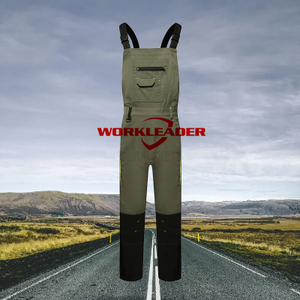
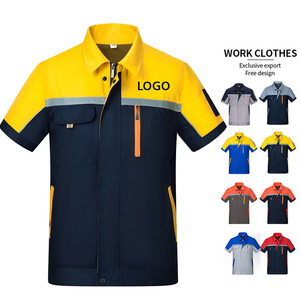
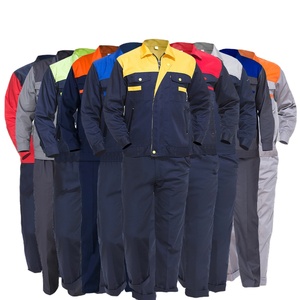
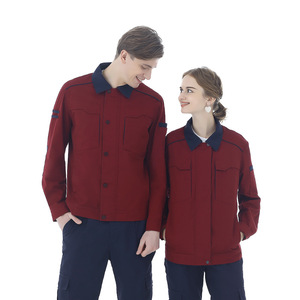
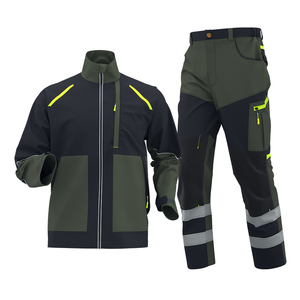
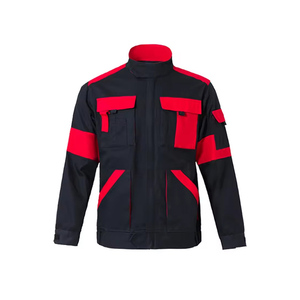
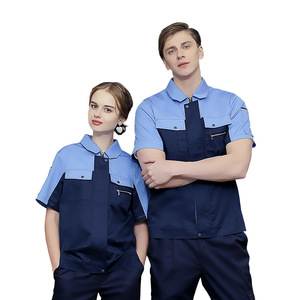
Our infrastructure supports a vast product spectrum: Men’s and Women’s fashion wear, heavy fleece hoodies, babywear, performance sportswear, medical scrubs, and technical industrial workwear (coveralls, mechanic suits, engineer uniforms). Functional finishes include water repellency (DWR), stain protection, anti-static treatment, silver-ion antimicrobial coatings, UV protection (UPF 50+), and flame-retardant processing.
Our primary production facility and export house is located at 270-A, Industrial Area-A, Cheema Chowk, Ludhiana, Punjab 141003, India — approximately 45 minutes by air from New Delhi. We maintain an open-door policy for brand owners, third-party inspection agencies (such as SGS or Intertek), and buyers. We also offer scheduled live virtual factory walkthroughs of cutting lines, sewing floors, and finishing units.
Eliminate intermediary markups and take control of your garment quality. Send us your tech packs, measurement charts, or target sample images today. Our engineering team will review feasibility and issue an itemized OEM quotation within 24 hours.