Custom engineered for high-durability, breathability, and industrial safety compliance across construction, engineering, automotive, and electrical sectors.
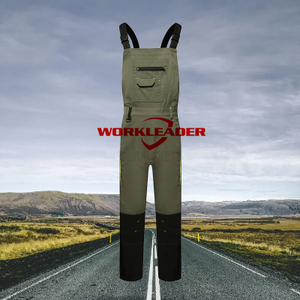
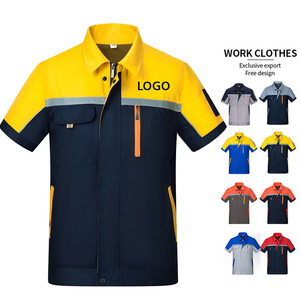
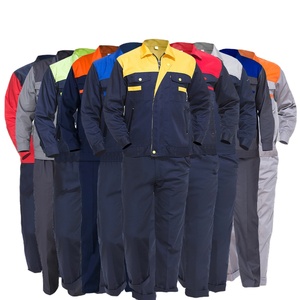

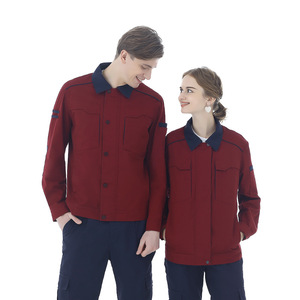
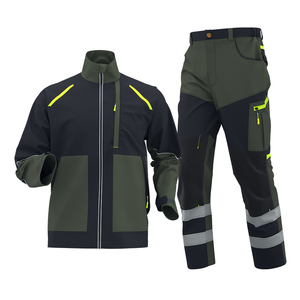
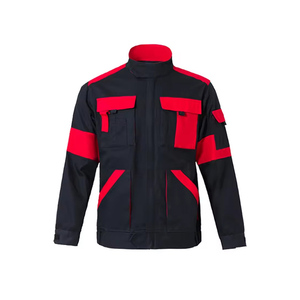
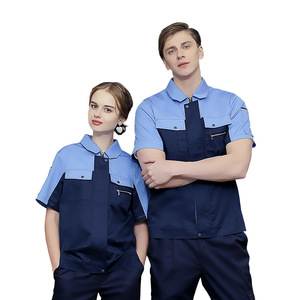
Since 1981, NG Apparels has operated as a vertically integrated fabric mill, workwear design house, and direct export manufacturer headquartered in Ludhiana, Punjab. Spanning over four decades of family-run heritage, our facility eliminates third-party trading agents, giving global procurement directors direct oversight of yarn selection, fabric weaving, technical finishing, pattern grading, and door-to-door bulk logistics.
Unlike commercial trading brokers who aggregate garments from unvetted subcontracted workshops, our single-roof manufacturing model guarantees complete supply chain transparency. Every lot of workwear coveralls, mechanic jackets, high-visibility overalls, and protective scrubs undergoes rigorous inline chemical and tensile validation. We hold extensive pattern libraries specifically calibrated for European, North American, Middle Eastern, and Australasian industrial sizing frameworks.
From 180 GSM summer cotton blends to 380 GSM heavy-duty poly-cotton ripstop canvas, we knit and weave raw fabrics in-house. Dyes are certified for colorfastness to industrial laundering (Grade 4+ rating per ISO 105-C06).
Orders undergo strict raw material inspection, inline seam stress audits, and end-line AQL 2.5 final checks. Seam burst pressure, zipper cycle durability, and bar-tack stress points are verified prior to export sealing.
The industrial workwear sector is undergoing a structural paradigm shift. Historically evaluated purely as a consumable operational expense, modern workwear uniforms are now recognized as critical human capital protection infrastructure. Enterprise buyers must navigate converging demands: heightened safety regulations, ergonomic wearability to mitigate workforce fatigue, and strict corporate ESG (Environmental, Social, and Governance) mandates.
Rigid boxy work suits are being replaced by active-articulation patterns. Incorporating 4-way stretch spandex gussets, pre-bent elbow sleeves, and expandable action-backs reduces physical strain on engineers and maintenance technicians during extended overhead or stooping tasks.
Modern supply chains demand hybrid fabric coatings. Single garments now combine flame retardancy (EN ISO 11612), anti-static conductive grid threads (EN 1149), hydrophobic oil/water repellency (AATCC 22), and UPF 50+ solar shielding for field engineers working in extreme environments.
Global enterprises are replacing virgin polyester with rPET (Recycled Polyethylene Terephthalate) derived from post-consumer plastic and GOTS-certified organic cotton. High-grade recycled blends maintain mechanical tensile strength while reducing lifecycle carbon footprint by up to 42%.
Engineered workwear now incorporates micro-encapsulated antimicrobial treatments that prevent bacterial odor build-up over 50+ commercial wash cycles. As industrial automation and electric vehicle (EV) manufacturing facilities scale globally, demand for lint-free, anti-scratch metal-free uniforms (preventing accidental vehicle paint scratching or electrical shorting) has increased dramatically.
Procurement leaders are shifting away from short-sighted initial unit price comparisons toward comprehensive Total Cost of Ownership (TCO) modeling. Cheap workwear uniforms made from low-grade staple polyester frequently fail within 12–15 commercial washes—manifesting as seam slippage, severe pilling, zipper jam, and dimensional shrinkage. This forces mid-season emergency re-orders that balloon total enterprise expenditure.
| Evaluation Metric | Traditional Sourcing (Low Unit Price Focus) | Modern Factory Strategic Alliance (TCO Model) |
|---|---|---|
| Fabric Tensile Strength | Single-needle low density weave (< 400N tear resistance) | Triple-stitched high-density ripstop (> 950N tensile resistance) |
| Laundering Durability | Fades and shrinks after 15–20 domestic wash cycles | Certified for 50–80 industrial high-temp laundry cycles |
| Customization & Fit | Generic standard sizes; high worker discomfort rates | Technical pattern grading, 3D motion crotch gussets & flex bands |
| Supply Chain Risk | Unvetted subcontracting layers; high risk of delay | Direct factory mill traceability & dedicated capacity allocation |
| Total Cost Over 2 Years | High (Requires 3 to 4 replacement cycles annually) | Optimal (Low replacement rate; uniform lasts full operational cycle) |
Technical answers to critical questions regarding minimum order quantities, customization options, fabric certifications, and global export lead times.
Our standard working MOQ is typically 300 pieces per style, which can be split across full size runs (S through 5XL) and custom color combinations. For styles utilizing our stock-supported heavy twill or poly-cotton canvas, lower trial quantities can be arranged. Custom fabric developments requiring specialized lot-dyeing or flame-retardant dipping require higher minimums based on mill lot sizes.
Development usually requires 7 to 9 weeks total: 1 week for tech pack review and costing, 2 weeks for prototype pattern cutting and pre-production (PP) sample sign-off, and 4 to 6 weeks for bulk sewing and quality control inspection. Ocean freight transit adds 4 to 6 weeks depending on destination port, while express air delivery takes 5 to 8 business days door-to-door.
Yes. We produce specialized protective workwear adhering to international safety standards including EN ISO 11612 (Flame Retardant), EN ISO 20471 / ANSI/ISEA 107 (High Visibility with certified retro-reflective tape), and EN 1149 (Anti-Static). Lab test reports and fabric lot certificate documentation are provided prior to dispatch.
We offer full OEM private-label customization including high-density embroidery, heat-transfer vinyl reflective logos, screen printing, custom woven collar labels, and nickel-free heavy-duty metal buttons and YKK/SBS zippers. All trims undergo anti-corrosion and nickel-release testing for safety compliance.
Absolutly. Our in-house merchandising team can create detailed CAD tech packs, measurement charts, and fabric specs directly from a physical reference garment, rough sketch, or vector file. We reverse-engineer construction details to ensure accurate pattern master grading.
Workwear orders are individually polybagged, silica-gel protected against humidity, and packed inside heavy-duty 7-ply corrugated export cartons reinforced with moisture-resistant outer wrapping and plastic strapping. Barcode labels and carton markings are applied according to buyer warehouse distribution specs.
Request factory-direct pricing, custom fabric swatches, or schedule a technical consultation with our engineering team today. Feasibility feedback provided within 24 hours.
Inquire Now