Engineered for international compliance, ultra-soft hand feel, and high industrial durability. Directly exported from Peru's premier textile hubs.

In the ultra-competitive luxury and organic babywear export landscape, global apparel brands face a dual imperative: maintaining pristine fabric softness for sensitive infant skin while ensuring exceptional durability across repeated industrial laundering. Peru has emerged as the premier global manufacturing corridor for private-label baby clothing, boutique apparel, and technical textiles, primarily due to its indigenous supply of Peruvian Pima Cotton (Gossypium barbadense) and integrated vertical production ecosystems located in Lima, Gamarra, and Chincha.
Information Gain Benchmark: Unlike standard Upland cotton species (staple length 26–28mm), Extra-Long Staple (ELS) Peruvian Pima measures between 38mm and 41mm. This extended staple length yields a yarn with 45% greater tensile strength and an extraordinarily low pilling index—essential for hypoallergenic infant bodysuits, sleepsuits, and rompers.
As a direct vertically-integrated apparel manufacturer operating since 1981, our facility eliminates third-party intermediary agent markups, providing private-label fashion brands and institutional importers direct access to specialized spinning, knitting, non-toxic piece dyeing, pattern grading, and door-to-door global logistics.
| Fiber Parameter | Peruvian Pima Cotton (ELS) | Standard Organic Upland Cotton | Commercial Combed Cotton |
|---|---|---|---|
| Staple Length (mm) | 38.0 mm - 41.0 mm | 26.0 mm - 28.5 mm | 24.0 mm - 27.0 mm |
| Micronaire (Fineness) | 3.3 - 3.8 (Silky feel) | 4.0 - 4.6 (Medium feel) | 4.2 - 4.9 (Standard feel) |
| Tensile Strength (g/tex) | 38.0 - 42.0 g/tex | 28.0 - 31.0 g/tex | 25.0 - 28.0 g/tex |
| Hypoallergenic Rating | Exceptional (Hand-harvested, zero wax chemical residue) | High (Bio-treated) | Moderate (Industrial chemical processing) |
| Pilling Resistance (Martindale) | Grade 4-5 (After 5,000 cycles) | Grade 3-4 | Grade 2-3 |
The Peruvian garment export market is undergoing a major structural evolution driven by global supply chain nearshoring, demanding stricter compliance with international environmental standards (GOTS, OEKO-TEX Standard 100 Class 1), and rapid order fulfillment windows. Modern buyers in North America, Latin America, and Europe are transitioning away from high-volatility Asian sourcing nodes to leverage Peru’s specialized regional benefits:
Garment engineering must adapt precisely to regional micro-climates, infant care habits, and safety regulation guidelines enforced by regional authorities such as the US Consumer Product Safety Commission (CPSC), EU REACH, and LATAM DIGESA standards.
Scenario: Premium eco-friendly baby brands serving temperate zones in North America and Western Europe.
Engineering Spec: 100% Peruvian Pima Interlock Knit (180-200 GSM). Flatlock anti-friction stitching, nickel-free YKK snap fasteners, fold-over mitten cuffs, and heat-transfer tagless neck labeling to eliminate skin abrasion.
Scenario: Everyday infant bodysuits and sunwear designed for humid climates across Latin America and Southern US.
Engineering Spec: 140-160 GSM Fine Rib-Knit or Single Jersey. High breathability index, bio-wash enzyme finish for maximum softness, low-impact non-reactive AZO-free botanical dyes.
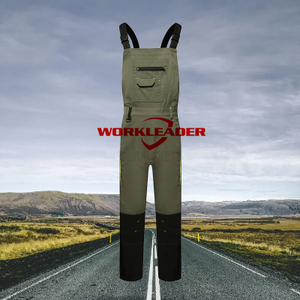
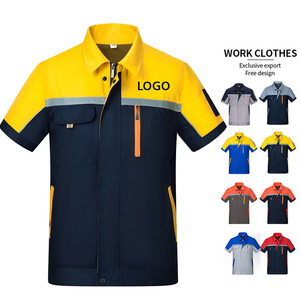
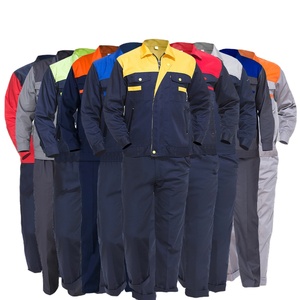
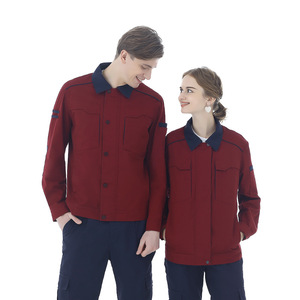
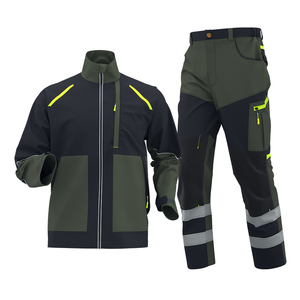
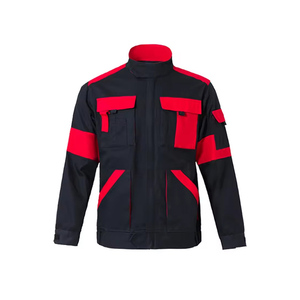
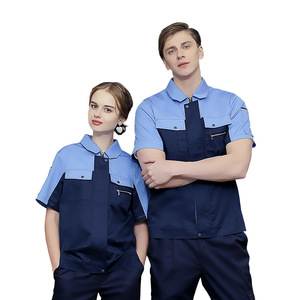
Scenario: Industrial workshop apparel, mechanics coveralls, and technician uniform lines for corporate contracts.
Engineering Spec: Heavyweight Pima/Polyester blended twills (240-280 GSM). Stain-repellent fluorocarbon treatment, bartacked stress points, and ripstop weaving for maximum tear resistance.
As a family-owned apparel manufacturer with over 45 years of direct factory-floor management, we operate without sourcing middlemen. Every purchase order is backed by documented quality control inspections executed at four distinct stages of production:
Spectrophotometer color matching (Delta E < 0.5) and yarn strength testing prior to circular knitting.
Hourly dimensional check against tech-pack measurement tables with strict seam tension verification.
100% needle detection scanning on all infant garments to guarantee 0% metallic contaminants.
Full MIL-STD-105E audit covering packaging durability, barcode readability, and wash shrinkage.
Our standard production MOQ starts at 300 pieces per style, which can be split across up to two colorways and a full infant size ratio (e.g., 0-3M, 3-6M, 6-12M, 12-18M, 18-24M). For custom-dyed pantone fabrics or specialized Jacquard knits, MOQ is typically 500 pieces per lot.
We supply official Certificates of Origin under the US-Peru Trade Promotion Agreement (PTPA) and the EU-Peru Free Trade Agreement. Because our spinning, knitting, and garment construction occur in Peru from qualifying yarns, our shipments clear customs at 0% import duty rates.
Development and prototype fitting samples require 7 to 10 working days. Pre-production (PP) samples take 7 days following client feedback. Bulk production runs require 4 to 6 weeks depending on style complexity. Air freight delivery adds 3-5 days, while ocean freight takes 10-14 days to major US/EU ports.
Yes. We manufacture using 100% GOTS certified organic Peruvian Pima cotton and OEKO-TEX Standard 100 Class 1 (safe for babies) dyes. Full transaction certificates (TC) and laboratory safety test documentation are provided with every batch shipment.
All snaps and metallic accessories are 100% nickel-free and pass rigorous pull-strength tests exceeding 70 Newtons (15.7 lbf) for 10 seconds, satisfying CPSC 16 CFR 1500 and EN 71-1 safety requirements to prevent choking hazards.
Absolutely. We operate as a full OEM/ODM facility. You can provide CAD pattern files, measurement sheets, artwork vector files, and customized label artwork. Alternatively, our in-house pattern masters can build tech packs based on physical reference samples.