Explore our export-ready uniform systems and high-durability apparel accessories designed for heavy industry, automotive, construction, and technical workwear sectors throughout Greater Mexico City.

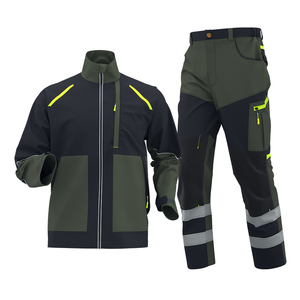
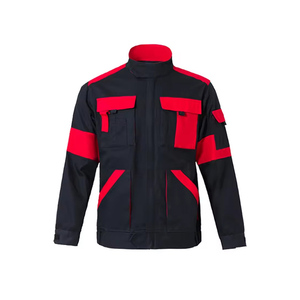
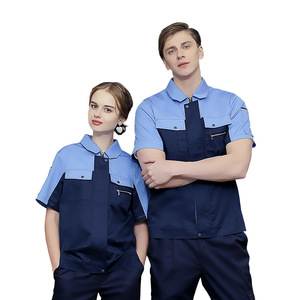
As Latin America’s undisputed industrial and financial powerhouse, Greater Mexico City (CDMX) represents a complex, rapidly evolving landscape for apparel manufacturing, workwear procurement, and fashion brand supply chains. The convergence of the USMCA (United States-Mexico-Canada Agreement / T-MEC) trade framework, accelerated nearshoring investment from North American apparel conglomerates, and an expanding regional maquiladora infrastructure has placed elevated demands on raw material quality, trim customization, and compliance standards.
For industrial manufacturers operating out of Azcapotzalco, Iztapalapa, Naucalpan, or Toluca, as well as high-fashion ateliers in Polanco, Roma Norte, and Condesa, sourcing top-tier garment trims, heavy-duty zippers, branded metal hardware, heat-transfer labels, and high-visibility retroreflective ribbons is no longer merely an aesthetic consideration—it is a critical driver of structural compliance, trade eligibility, and brand differentiation.
Under USMCA Chapter 6 (Textiles and Apparel), qualifying for duty-free access across North American borders hinges heavily on strict "yarn-forward" rules of origin. For Mexico City garment exporters supplying the United States or Canadian markets, every input—ranging from primary woven and knitted fabrics to thread, drawstrings, elastic bands, zippers, and pocketing fabric—must satisfy stringent traceability protocols.
Partnering with a vertically integrated manufacturer that provides documented certification for yarn origin, OEKO-TEX Standard 100 compliance, and GOTS organic certification guarantees that CDMX apparel operations avoid sudden tariff penalties or customs delays at ports of entry like Laredo, El Paso, or Mexico City’s AICN / NLU cargo terminals.
The historical reliance on third-party sourcing agents or middleman brokers in East Asia introduced significant systemic vulnerabilities: unpredictable maritime shipping lead times (often exceeding 12–16 weeks), opaque quality management, unauthorized factory subcontracting, and inflated commission markups. Modern procurement directors in Mexico City are aggressively transitioning toward direct factory partnerships.
By eliminating sourcing agents, CDMX apparel companies gain direct communication with master patternmakers and textile engineers. This direct-to-factory model collapses product development timelines from months to weeks, enabling rapid prototype iterations, direct custom metal die casting, exact Pantone color matching, and transparent door-to-door air freight or ocean container logistics.
From spinning raw fiber to custom circular knitting, weaving, chemical finishing, and precision metal trim stamping—all operations remain consolidated under one audited roof.
Custom woven care labels and thermal heat-transfer prints engineered specifically to meet Mexican official standards for commercial labeling, textile fiber disclosure, and wash durability.
Precision-molded zinc alloy metal buttons, nickel-free snap fasteners, silicone high-frequency badges, and heavy-duty brass zippers tested for high tensile load resistance.
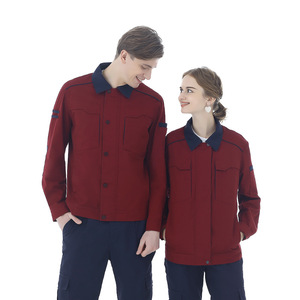
Industrial uniforms deployed across Mexico City’s construction projects, automotive assembly lines, and electrical utility grids demand components capable of withstanding extreme mechanical stress and industrial laundering. Standard commercial trims fail under continuous exposure to high-temperature pressing, abrasive chemicals, and outdoor UV rays.
Our workwear trim systems feature:
Our custom garment trims, technical workwear accessories, and manufacturing capabilities directly power a wide spectrum of specialized economic hubs operating within the Mexico City Metropolitan Area (ZMVM):
Challenge: Technicians working on high-performance engine bays and aerospace components require scratch-free, anti-static (ESD) workshop uniforms with concealed non-conductive trims to prevent vehicle body paint damage.
Solution: We engineer covered plastic snap buttons, rubberized zipper pulls, and anti-static nylon-blend workwear suits with micro-encapsulated carbon fiber grid inserts. Moisture-wicking quick-dry mesh panels maintain worker comfort in enclosed shop floors.
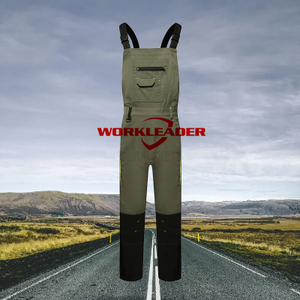
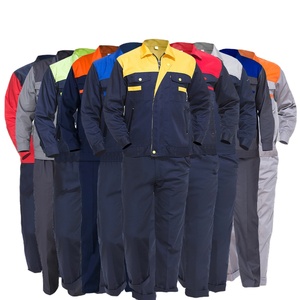
Challenge: Heavy engineering coveralls and bib overalls deployed on CDMX urban transit and sky-rise developments demand abrasion resistance at stress points like knees, elbows, and pocket flaps.
Solution: Supply of rip-resistant 65/35 Poly-Cotton work outerwear outfitted with bartacked stress points, 3M retroreflective striping, multi-pocket utility loops, and heavy-duty metal shank buttons built for extreme physical wear.
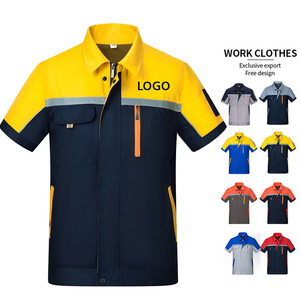
Challenge: Warehouse logistics and last-mile delivery fleets navigating CDMX require lightweight, high-mobility, short/long-sleeve uniform jackets that withstand constant friction and frequent commercial laundering.
Solution: High-elasticity nylon-spandex workshop uniforms paired with breathable mesh gussets, customized high-density embroidered logo badges, and durable poly-zipper assemblies designed for ergonomic range of motion.
Challenge: Premium Mexican lifestyle and designer activewear labels require custom-dyed high-density woven damask labels, custom silicone hangtags, and GOTS-certified organic cotton accessories to project high luxury positioning.
Solution: Custom trim package sourcing—including matte black anodized metal tips, custom laser-etched wooden/horn buttons, recycled poly-bag packaging, and OEKO-TEX certified cotton drawcords tailored for upscale retail presentation.
The Latin American apparel sector is undergoing a profound structural shift driven by technology integration, environmental regulations, and buyer preferences. Buyers and sourcing directors serving the Mexico City market must navigate several critical industry trends:
Driven by consumer demand in North America and strict municipal sustainability directives within Mexico City, fashion houses and corporate uniform programs are phasing out virgin synthetic trims. Sourcing directors are prioritizing GOTS-certified organic cotton, recycled polyester (rPET) zipper tapes made from post-consumer plastic bottles, and biodegradable bamboo-viscose woven labels. Providing certified lot-level chain of custody documents is now mandatory for premium brand procurement.
As occupational health and safety laws enforcement tightens across Mexico (governed by the Secretaría del Trabajo y Previsión Social - STPS), industrial employers are upgrading standard work garments to high-visibility, flame-retardant (FR), and arc-flash protective uniforms. Advanced retroreflective trims that incorporate micro-prismatic glass bead technology are becoming standard across all public works, mining, and oil & gas apparel contracts.
Traditional paper patterns and physical swatches sent via international post are rapidly being replaced by 3D CAD pattern files (DXF/RUL formats) and digital tech packs. Modern trim manufacturers must maintain dedicated engineering teams capable of ingesting digital blueprints, cost-optimizing marker layouts, and casting custom sample molds within 5 to 7 business days, drastically reducing pre-production latency.
Founded in 1981 in Ludhiana, India, NG Apparels is a family-owned custom apparel manufacturer, fabric mill, and direct export house built on three generations of master textile craftsmanship. Operating completely without sourcing agents or third-party brokers, we deliver end-to-end manufacturing solutions for over 2,400 apparel brands, corporate clients, and industrial conglomerates across 30+ countries.
Your tech packs, artwork, and proprietary patterns remain completely confidential within our factory. Working direct removes third-party markups and prevents design leaks to unvetted sub-factories.
Accelerate your initial product design phase by leveraging our extensive repository of pre-engineered, fit-tested CAD pattern blocks across men's, women's, babywear, and workwear lines.
Documented fair wages, strict zero-child-labor policies, flexible shifts for women operators, and open-door audit policies for international buyers and third-party inspectors.
Whether you require custom knits (single jersey, interlock, French terry, 400 GSM fleece), specialized woven constructions (ripstop, canvas, twill), or mechanical/chemical functional finishes (water repellency, antimicrobial, UV protection, stain release), our 45 years of continuous manufacturing experience guarantees unyielding quality on every shipment delivered to Mexico City.
A: Total factory production time generally takes 7 to 9 weeks: 1 week for initial tech pack review, engineering costing, and fabric feasibility; 2 weeks for prototype sample development and pre-production (PP) physical sample sign-off; and 4 to 6 weeks for full bulk manufacturing. Express air freight to Mexico City (AICN or NLU airports) adds 5 to 8 transit days, while sea freight via Veracruz or Manzanillo ports takes approximately 4 to 5 weeks.
A: Our standard working MOQ for custom cut-and-sew garment manufacturing is 300 pieces per style, which can be split across multiple colorways and a complete size scale. For orders utilizing stock-supported fabrics, lower MOQs can be negotiated. For custom yarn-dyed knitted fabrics or specialized metal trim mold casting, higher volumes are required due to fixed dye-house lot sizes and tooling setup economics.
A: We manufacture custom woven, printed, or heat-transfer care labels fully compliant with Mexico’s NOM-004-SE-2021 commercial labeling standards. This includes accurate Spanish-language fiber composition percentages, brand identification, country of origin markings, tax ID (RFC) placeholders, and standardized ISO wash care symbology.
A: Yes. We regularly manufacture hoodies, t-shirts, activewear, and workwear accessories utilizing 100% GOTS-certified organic cotton, recycled polyester (rPET), and eco-friendly bamboo blends. Complete transaction certificates (TC) and raw material chain-of-custody documentation are supplied alongside every shipment to support your brand's sustainability claims.
A: Because we operate as a direct factory without sourcing agents, your tech packs and artwork are never circulated to third-party quotation networks. All physical patterns, CAD files, embroidery matrices, and metal hardware dies are archived securely inside our facility under your dedicated corporate account for seamless repeat ordering.
A: We operate under international AQL 2.5 inspection guidelines. Inline quality audits are conducted at cutting, stitching, and finishing stages. Fabric lots undergo tensile testing, dimensional stability checks (shrinkage control), color fastness validation, and nickel-release testing for metal hardware. Comprehensive factory inspection reports travel directly with export packing lists.
Partner directly with an established, vertically integrated custom apparel manufacturer. Submit your tech pack, design sketches, or trim specifications to receive an expert feasibility study and competitive quotation within 24 hours.